
Estimated reading time: 8 minutes
Last updated: October 8, 2026.
Toronto remains an expensive city to live in, with housing taking up the largest share of many household budgets. But the cost of living is not determined by rent alone. Transportation, groceries, utilities, internet, insurance, and everyday spending can add substantially to the amount a renter or homeowner needs each month.
This guide looks at the cost of living in Toronto in 2026, including current rental-market conditions, home prices, TTC fares, groceries, transportation, and the income needed to reasonably carry Toronto housing costs.
How Much Does It Cost to Live in Toronto in 2026?
There is no single monthly cost that applies to every Toronto resident. Someone sharing an apartment and relying on the TTC can have a dramatically different budget from someone living alone and owning a vehicle.
Housing remains the biggest variable. According to the October 2026 National Rent Report , average asking rent for apartments and condominiums in Toronto was $2,554 in September 2026.
Toronto rents were down 1.4% compared with the previous year, continuing a period of softer rents following the peaks reached earlier in the decade. Even after that decline, however, housing remains expensive relative to many other Canadian cities.
Renting in Toronto in 2026
For someone moving to Toronto today, asking rent is generally more useful than the average rent paid by existing tenants. Long-term tenants in rent-controlled units may be paying considerably less than someone entering the market today.
Recent Toronto rental-market data puts typical one-bedroom asking rents around the low-$2,000s and two-bedroom units generally in the mid-to-high-$2,000s, depending on property type, neighbourhood, age, amenities, and condition.
Statistics Canada reported an average asking rent of approximately $2,650 for a two-bedroom apartment in the Toronto census metropolitan area during the second quarter of 2026.
Renters should also remember that Toronto is not one uniform rental market. Downtown condominiums, older purpose-built rental buildings, basement apartments, houses, and properties farther from rapid transit can have significantly different rents.
If you're unfamiliar with the process, our guide to renting property in Toronto explains what tenants should expect when searching and applying for a rental.
Buying a Home in Toronto in 2026
Home prices have also moderated from previous highs, but buying in Toronto still requires substantially more capital than renting.
According to September 2026 market data from the Toronto Regional Real Estate Board , the average selling price across the City of Toronto was approximately $1.03 million.
Average City of Toronto prices by property type included approximately:
- Condo apartment: $640,248.
- Semi-detached home: $1,207,884.
- Detached home: $1,562,966.
These are citywide averages, not prices for a specific neighbourhood or property. Toronto's housing market varies substantially by location, lot size, condition, property type, parking, school district, and proximity to transit.
The cost of owning also extends beyond the purchase price. Buyers need to account for mortgage payments, property taxes, home insurance, utilities, maintenance, condominium fees where applicable, and both provincial and Toronto land transfer taxes at purchase.
Buyers comparing opportunities can explore LandLord's Toronto real estate services for additional information about purchasing and selling investment properties.
Transportation Costs in Toronto
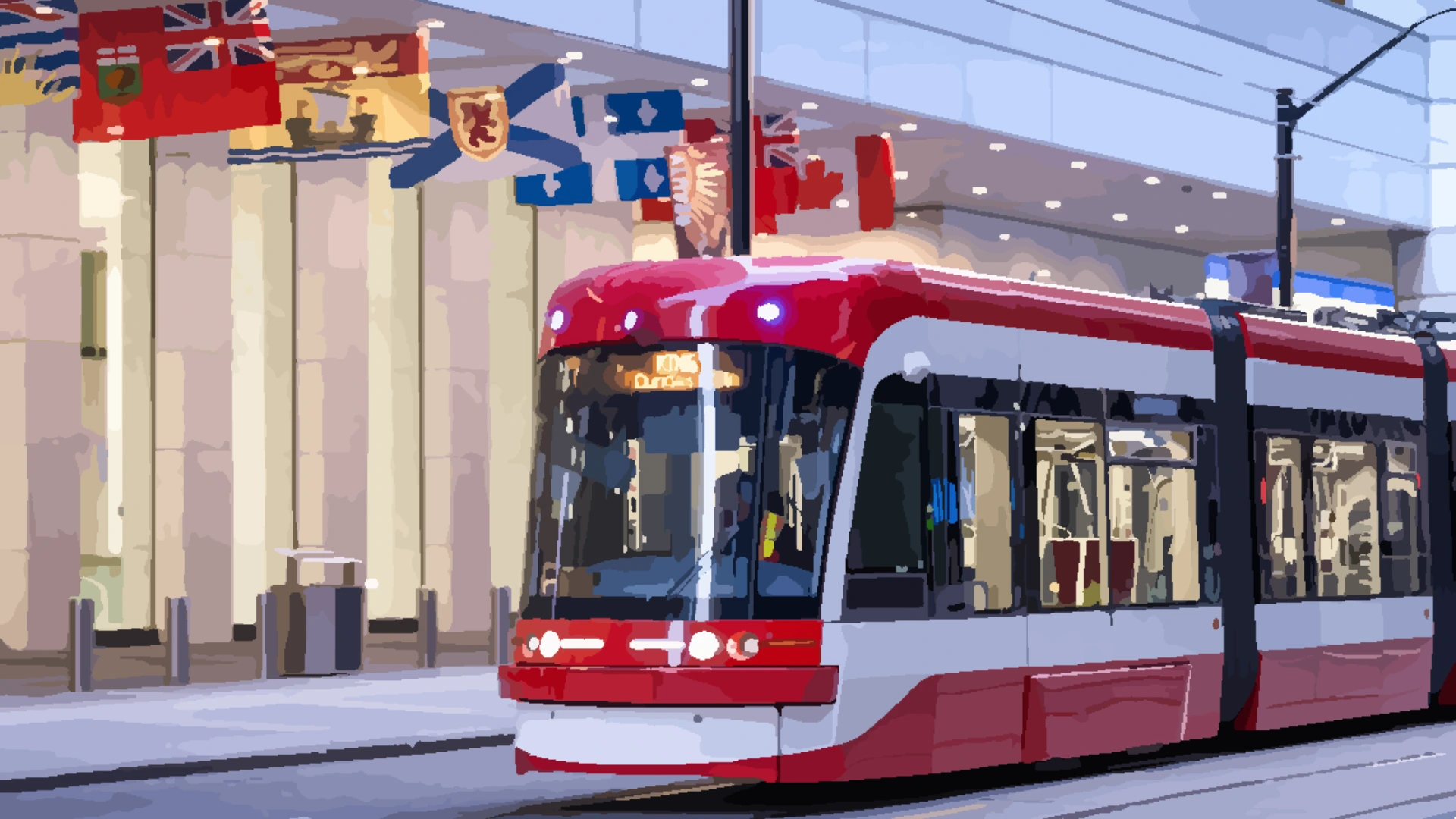
Public Transit: TTC Fares in 2026
Toronto changed the way frequent TTC riders pay for transit in September 2026.
Most traditional monthly passes have been replaced by monthly fare capping. Riders who use the same eligible payment method throughout the month automatically ride free after reaching 47 paid TTC trips.
Current adult TTC fares are:
- PRESTO: $3.30 per paid trip.
- Debit or credit card: $3.30 per paid trip.
- Cash: $3.35 per trip.
For an adult paying $3.30 per eligible trip, reaching the 47-trip monthly cap represents $155.10 in paid TTC fares before additional eligible trips become free for the remainder of that calendar month.
Cash fares do not qualify for monthly fare capping.
Car Ownership in Toronto
A car can make some Toronto commutes easier, but the monthly cost involves much more than a loan or lease payment.
Drivers need to budget for:
- Vehicle financing or depreciation.
- Insurance.
- Fuel or charging.
- Maintenance and repairs.
- Winter and seasonal tires where applicable.
- Parking.
Because those expenses vary widely by driver and vehicle, a single monthly figure can be misleading. The CAA Driving Costs Calculator allows drivers to estimate the ownership cost of a specific vehicle.
For someone choosing between neighbourhoods, a higher rent near rapid transit may sometimes be less expensive overall than a cheaper rental that requires car ownership.
Grocery Costs in Toronto
Food remains another significant household expense. Statistics Canada reported that prices for food purchased from stores were 2.8% higher in August 2026 than one year earlier.
Grocery spending varies significantly by diet and shopping habits, but a 2026 Interac survey found that Canadians living alone spent approximately $102 per week on groceries, while people in shared households averaged approximately $80 per person per week.
That works out to roughly:
- Single-person household: about $440 per month.
- Two people sharing grocery costs: about $690 per month combined.
These figures are national averages rather than Toronto-specific minimums. Someone who shops at discount supermarkets and cooks most meals at home may spend less, while specialty diets, prepared food, premium stores, and frequent dining out can increase the budget considerably.
Statistics Canada's Food Price Data Hub provides current retail prices for commonly purchased foods.
Utilities, Internet and Other Monthly Expenses
Utility costs are especially difficult to represent with one Toronto average because rental arrangements vary.
Some apartments include heat and water in the rent while others require tenants to pay electricity, gas, water, or several utilities separately. Internet and mobile-phone plans are typically additional.
Before signing a lease, renters should confirm exactly which expenses are included in the advertised rent and which will be billed separately.
A reasonable planning budget should account for:
- Electricity and other tenant-paid utilities.
- Internet.
- Mobile phone service.
- Tenant insurance.
- Laundry where it is not included in the unit.
- Parking if required.
What Salary Do You Need to Afford Rent in Toronto?
Rather than assigning one salary that everyone needs to “live comfortably,” it is more useful to compare rent with gross household income.
A commonly used budgeting benchmark is to keep housing costs at approximately 30% to 35% of gross income. Many Toronto renters spend more than this, but the benchmark illustrates how local rents compare with earnings.
Using Toronto's September 2026 average asking rent of $2,554:
- At 35% of gross income, the renter would need approximately $88,000 per year.
- At 30% of gross income, the renter would need approximately $102,000 per year.
Using Statistics Canada's $2,650 two-bedroom asking-rent benchmark:
- At 35% of gross household income, approximately $91,000 per year.
- At 30% of gross household income, approximately $106,000 per year.
These are affordability benchmarks rather than required salaries. Someone without debt or a vehicle may be comfortable spending a higher percentage of income on rent, while a household with childcare, student loans, car payments, or significant savings goals may need considerably more income.
To compare earnings for different occupations, the Government of Canada Job Bank provides current wage estimates across Canada.
Estimated Monthly Cost of Renting in Toronto
The table below provides an illustrative monthly budget for a single renter in a one-bedroom apartment and two people sharing a two-bedroom apartment.
It should be used as a planning example rather than a universal Toronto cost-of-living figure.
| Expense Category | 1-Bed Apartment (1 Person) | 2-Bed Apartment (2 People) |
|---|---|---|
| Rent | Approx. $2,250 | Approx. $2,750 |
| Utilities + Internet | $200–$250 | $250–$325 |
| TTC | Up to $155.10 | Up to $310.20 |
| Groceries | Approx. $440 | Approx. $690 |
| Mobile Phone | $40–$60 | $80–$120 |
| Personal / Entertainment | $300–$500 | $500–$750 |
| Estimated Monthly Total | Approx. $3,385–$3,655 | Approx. $4,580–$4,945 |
Note: This is an illustrative budget, not a standardized cost-of-living measure. Rent varies by property and neighbourhood; utility arrangements differ by lease; grocery figures are based on broader 2026 Canadian spending data; and discretionary spending varies substantially by household. Car ownership, debt payments, childcare, insurance, savings, and other major expenses are not included.
How to Reduce the Cost of Living in Toronto
Housing decisions have the greatest potential to change a Toronto household's monthly budget.
Renters may be able to lower costs by:
- Sharing a larger apartment rather than renting alone.
- Comparing older purpose-built rentals with newer condominium units.
- Looking beyond the downtown core while considering the cost of the commute.
- Prioritizing transit access if it allows the household to avoid car ownership.
- Confirming which utilities are included before comparing rental prices.
- Comparing several neighbourhoods instead of focusing on one area.
Renters can browse current Toronto rental listings to compare rents, locations, property types, and included amenities.
Final Thoughts on the Cost of Living in Toronto in 2026
Toronto remains expensive, but the city's cost of living is more nuanced than a single rent or salary figure.
Rental prices have softened from previous peaks, while buying a home remains a major financial commitment. At the same time, food, transportation, utilities, and other recurring expenses continue to influence how much income a household actually needs.
The most useful way to build a Toronto budget is to start with the actual housing option being considered and then add the expenses that apply to that particular household.
For renters, comparing the complete monthly cost — not just the advertised rent — provides a much clearer picture of what living in Toronto will actually cost.
Interactive Planning Tool
Toronto Monthly Budget Calculator
Enter your estimated monthly expenses to see your total monthly and annual budget, plus a housing-to-income benchmark based on your rent or mortgage.
Your Estimate
Your Monthly Budget
Monthly Expense Breakdown
About the income benchmark: The gross income estimate uses your housing expense only. For example, at the 35% benchmark, annual housing costs are divided by 0.35.
This is a budgeting tool, not a leasing approval calculator. Rental applications may also be assessed using income documentation, credit history, rental history, references, and other lawful screening criteria.
Results are estimates based entirely on the amounts entered and are intended for general planning purposes.