Rent Is Received
Tenant payments are received through an approved payment method and matched to the appropriate tenancy.

We collect rent, track payment status, follow up on overdue balances and send net owner proceeds by direct deposit — all as part of full-service property management.
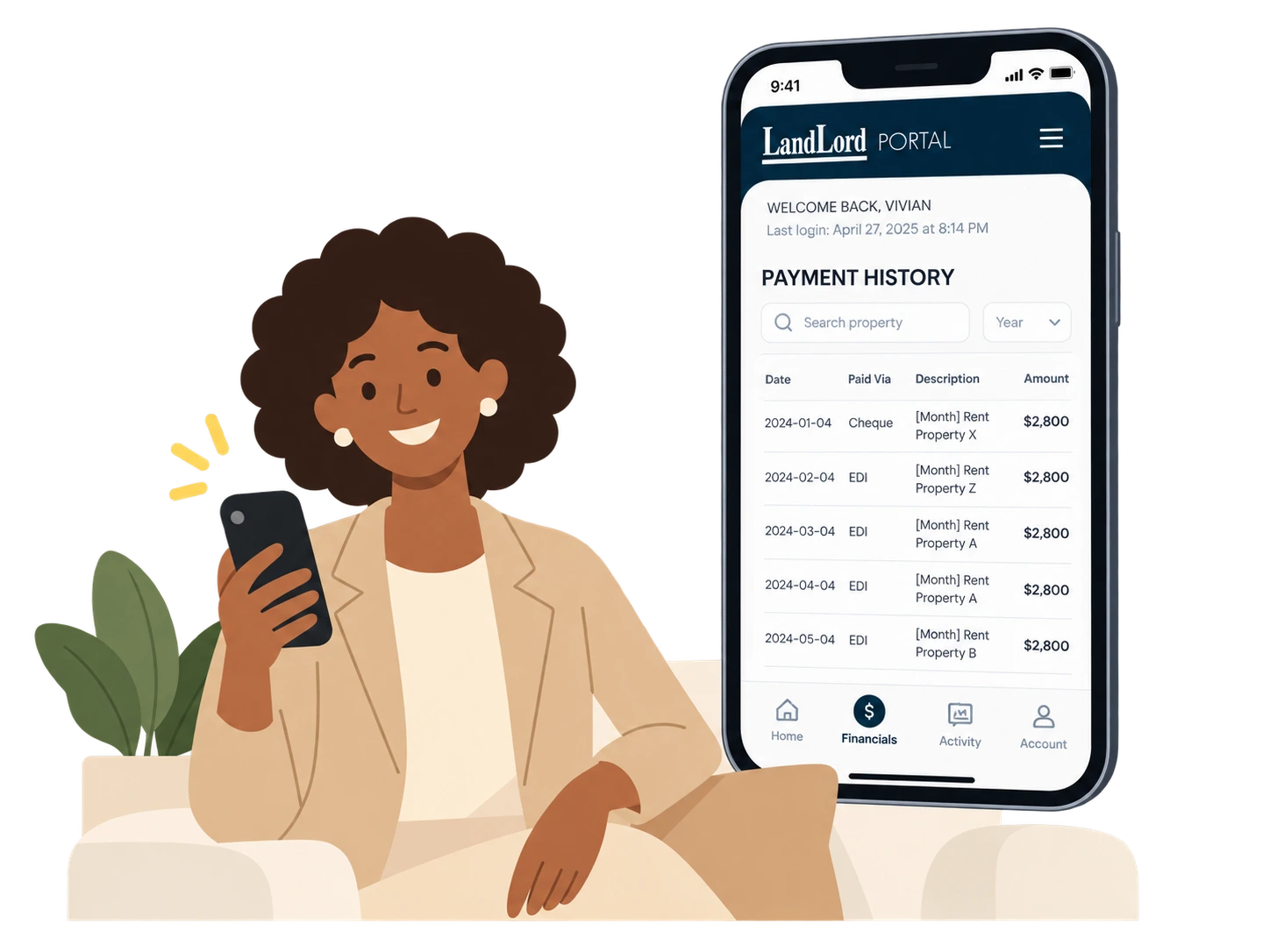
From the due date onward, we receive tenant payments, track their status, follow up when something needs attention and complete owner payout once the month's applicable charges have been accounted for.
Tenant payments are received through an approved payment method and matched to the appropriate tenancy.
We monitor full, partial and outstanding balances so we know when follow-up is required.
After applicable property expenses and management fees are accounted for, the remaining proceeds are sent to your designated bank account.
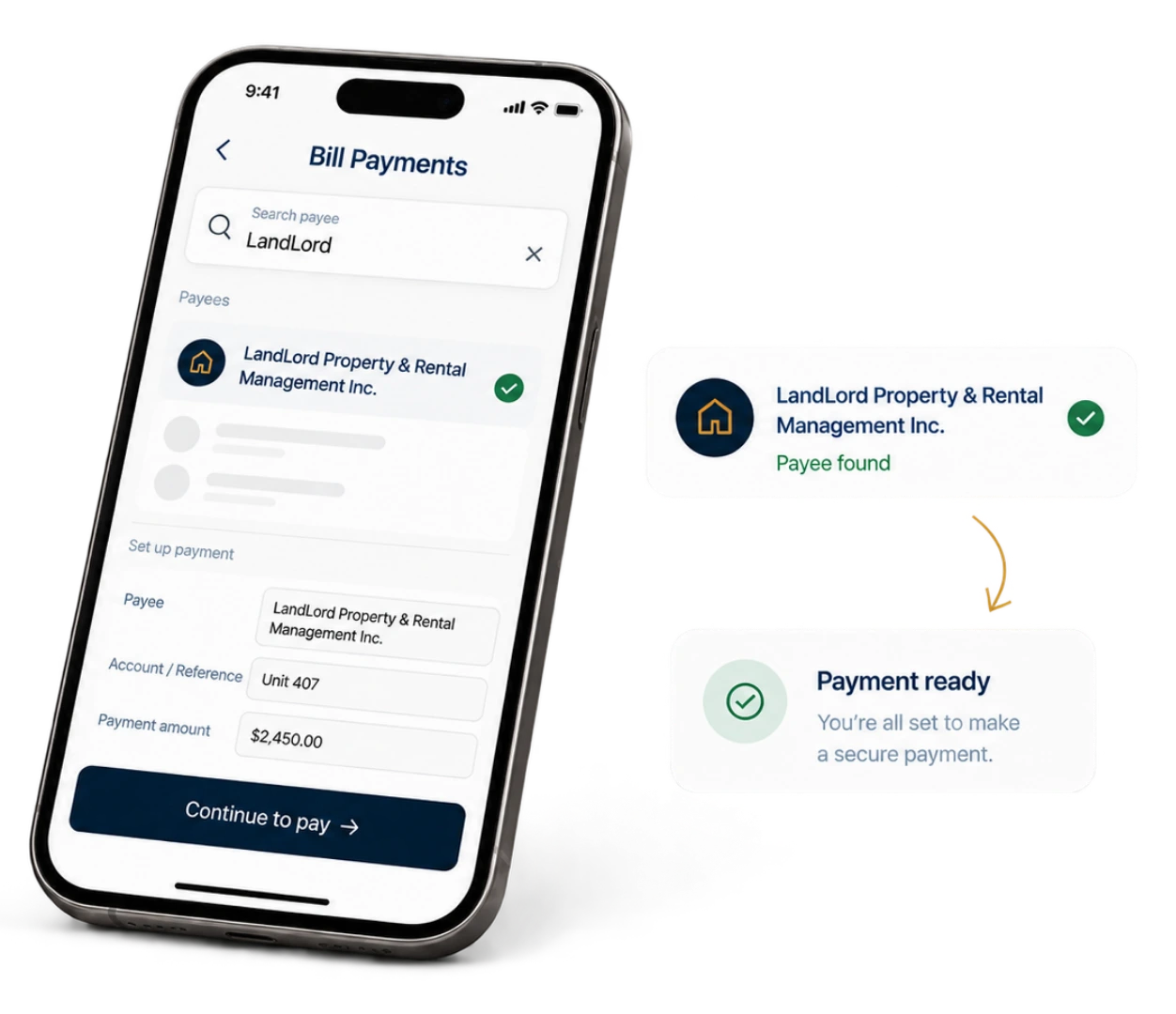
A strong collection process should make the payment step straightforward. We give tenants clear, familiar ways to pay so there is less room for confusion at the start of each rent cycle.
LandLord supports multiple approved payment methods and is also listed as a payee with major Canadian banks. That allows many tenants to submit rent through the bill-payment area of their online banking, using a payment path they already know.
Clearer payment routes help reduce avoidable errors, misapplied payments and unnecessary delays — while making incoming rent easier for our team to identify, track and reconcile.
We do not ignore arrears, and we do not assume every late payment requires the same response.
Our job is to understand the situation quickly, protect the owner's position and pursue the resolution most likely to bring the tenancy back into good standing.
We confirm that rent remains outstanding, review the payment history and contact the tenant early rather than allowing the balance to drift.
Experience matters here. We assess whether the issue appears to be a short-term disruption, a recurring pattern or a situation that requires a firmer response.
Where appropriate, we use direct communication, negotiation and structured payment arrangements to bring the account back into good standing.
If non-payment continues, an arrangement is not honoured or the circumstances call for formal action, we move to the appropriate notices and coordinate paralegal or legal support as required.
The objective is resolution, not delay. A good tenant with a temporary problem may be worth preserving; persistent or unresolved arrears require decisive escalation. Our team uses experience to know the difference.
Rent oversight is not only about collecting this month's payment. Each year, we share the current guideline, confirm whether an eligible increase should be applied and keep the next eligible date visible in the client portal.
We let owners know the current annual guideline and when it becomes relevant to their property.
Before an eligible increase is applied, we confirm how the owner wants to proceed.
Owners can also see when the next rent increase becomes eligible through the client portal.
A property manager can receive and track tenant payments, monitor outstanding balances, follow up on overdue rent and account for the income before owner payouts are issued.
Tenants can pay rent using approved methods including cheque, direct deposit and online banking. LandLord is also listed as a payee with major Canadian banks, allowing many tenants to submit rent directly through their bank's bill-payment system.
It gives tenants a familiar way to pay through online banking and creates a clearer payment trail. That can help reduce avoidable errors or delays while making incoming rent easier for our team to identify and reconcile.
We confirm the payment status, contact the tenant promptly and assess the circumstances. Where a practical resolution is appropriate, we may use communication, negotiation or a structured payment arrangement. If non-payment continues or formal action is required, we escalate to the appropriate notices and professional paralegal or legal support.
No single response fits every situation. Our priority is to protect the owner's position while using experienced judgment. A temporary and reasonable disruption may be resolved without losing an otherwise strong tenancy; persistent or unresolved non-payment is escalated appropriately.
After collected rent and the applicable property expenses and management fees have been accounted for, the remaining net proceeds are deposited to the owner's designated bank account.
Yes. Rent activity and related financial records are reflected in owner reporting and available through the LandLord client portal.
From convenient payment options to arrears follow-up and owner payouts, we manage the recurring rent cycle as part of your property management service.