Developer-Held Condo Inventory
High-Rise Condo Units
Developer-owned condo suites or groups of units retained as rentals, with leasing, tenant management, suite maintenance and condo coordination.

Property Management · Real Estate Developers
When the strategy is to retain all or part of a development as rental inventory, the operating challenge begins at turnover: lease units efficiently, stabilize occupancy, control expenses, protect the asset and maintain reliable reporting. LandLord manages rental operations for developer-held condos, rental buildings, multiplexes and other multi-unit properties across the GTA.
Property / Asset Types
LandLord supports developers retaining completed residential assets as rentals, with the management structure adapted to the scale and operating requirements of the property.
Developer-Held Condo Inventory
Developer-owned condo suites or groups of units retained as rentals, with leasing, tenant management, suite maintenance and condo coordination.
Infill & Low-Rise Development
Duplexes, triplexes, fourplexes and other small multi-unit assets retained for rental income after completion or conversion.
Rental Operations for Developer-Held Assets
LandLord provides the operating infrastructure behind a developer-held rental asset: leasing execution, revenue administration, tenant operations, maintenance, expense coordination and reporting. The scope can support a single multiplex or a larger portfolio with formal approval and reporting requirements.
Market positioning, listings, showings, applications, screening and lease coordination as units become available for occupancy.
Move-ins, deposits, resident communication, early service issues and vacancy tracking organized through the initial operating period.
Rent collection, arrears follow-up, rent changes, owner distributions and organized records to support predictable cash flow.
Work-order triage, warranties, recurring services, vendor coordination, approval thresholds and 24/7 emergency response.
Invoices, approved property expenses, statements, documentation and reporting structured around ownership and internal review needs.
Tenant communication, inspections, renewals, notices, turnover coordination and day-to-day property management after stabilization.
Assets We Manage
LandLord manages more than 2,500 rental units across Toronto and the GTA, giving developers access to an operating team experienced across individual rental inventory, multi-unit buildings and smaller infill assets.
The management structure can be adapted to unit count, ownership structure, internal approval requirements and reporting cadence.
Developer-owned suites or groups of units retained as rentals, with leasing, tenant management and building coordination.
Rental buildings requiring coordinated leasing, rent administration, maintenance, tenant operations and portfolio-level reporting.
Duplexes, triplexes, fourplexes and other small residential assets requiring complete building-level rental operations.
Laneway homes, garden suites and additional rental units requiring independent leasing and ongoing management.
Operating Priorities
For a developer-held rental, performance depends on what happens after delivery: how quickly units lease, how consistently rent is collected, how operating costs are controlled and how well the asset is maintained.
Structured leasing and move-in execution helps reduce avoidable vacancy between completion and stabilized operations.
Consistent rent administration, arrears follow-up and renewal processes support more predictable income.
Vendor coordination, approval thresholds and documented expenses give ownership better control over recurring costs.
Inspections, maintenance records and organized documentation support long-term ownership and future asset decisions.
Developer-to-Management Handoff
LandLord can step in as the project approaches turnover, at occupancy or after the asset is already operating. The process is structured around the asset, ownership team and current stage.
Confirm unit count, ownership structure, occupancy status, rent objectives, decision-makers, approval thresholds and reporting requirements.
Transfer keys, warranties, manuals, vendor contacts, utilities, deficiencies, leases and the records required for ongoing management.
Market vacant inventory and establish leasing workflows, or transition existing tenants and payment channels into management.
Coordinate move-ins, tenant communication, early deficiencies, work orders, arrears and recurring operating routines.
Run the property under agreed approval rules, maintenance standards, financial controls and reporting cadence.
Portfolio & Performance Visibility
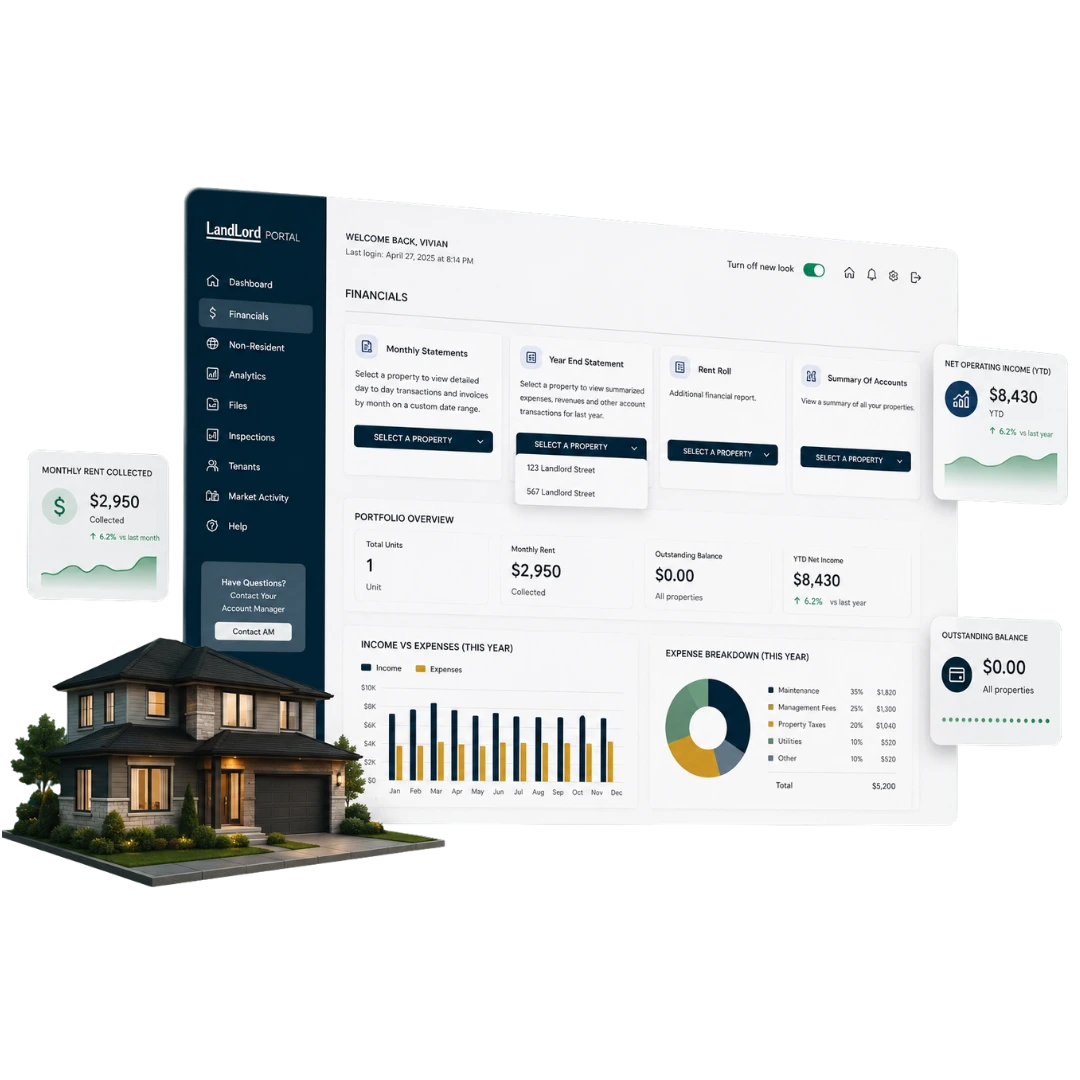
Larger developers often need more than basic owner statements. LandLord can structure reporting around portfolio visibility, leasing status, expenses, maintenance activity and the approval workflows used by the ownership team.
Service Areas
Local coverage for developer-held rental assets across Toronto and surrounding GTA markets.
Developer FAQs
Yes. Developer-owned suites or groups of units can be leased and managed as rental inventory, including tenant communication, rent administration, maintenance coordination, condo procedures and owner reporting.
Yes. The operating structure can be adapted to the scale of the asset, from duplexes, triplexes and fourplexes to larger multi-unit rental portfolios and buildings. LandLord provides rental property management for the units and rental operations; we do not provide condominium corporation or condo-board management.
Yes. In fact, this is our preferred model. LandLord manages the lease-up and tenant placement, then remains responsible for the tenants we place through ongoing rent administration, tenant communication, maintenance, inspections and reporting. This creates continuity from initial occupancy through long-term property management.
In many cases, yes. Existing leases, tenant records, payment information, work orders, vendors, keys and property documentation can be transferred into a structured management handoff.
Planning to Hold the Asset?
Whether the property is approaching occupancy or already complete, we can scope lease-up, stabilization and ongoing management around the asset, ownership structure and reporting requirements.