Shared Utilities & Mechanical Systems
Water, heating, electrical service and drains may connect the suite to the main dwelling even when the tenancy is separate.

Property Management · Secondary, Laneway & Garden Suites
Full-service management for basement apartments, internal secondary suites, laneway suites, garden suites and other additional residential units. LandLord manages the tenancy independently while coordinating the access, shared systems and property responsibilities that connect it to the main home.
Secondary-Suite Challenges
A secondary suite can operate as its own rental while still sharing physical systems, exterior areas or access with the main home.
Water, heating, electrical service and drains may connect the suite to the main dwelling even when the tenancy is separate.
Shared walls, floors, yards and close proximity can turn small lifestyle conflicts into recurring management issues.
Repairs may require entry through the main property, exterior pathways or mechanical areas serving more than one household.
Bins, snow, pathways, yards, storage and parking need clear allocation before the tenancy begins.
When the owner lives in the main home, professional communication helps preserve boundaries and reduce direct conflict.
Available permits, registrations, inspections and safety records should be organized before leasing or transferring management.

Full-Service Suite Management
LandLord manages secondary suites, basement apartments, laneway suites and garden suites across Toronto and the GTA, coordinating tenant placement, rent administration, maintenance, inspections, notices and owner reporting. Each suite is managed as its own tenancy while shared systems, access and property responsibilities remain connected to the main home.
Explore What’s Included in Our Property Management ServicesSuites We Manage
The management plan changes depending on whether the suite is inside the main house, attached to it or located in a separate building on the property.
Separate lower-level tenancies with special attention to sound, drainage, access, utilities and shared building systems.
Self-contained units within detached, semi-detached and townhouse properties, including upper- and lower-level layouts.
Detached rental homes accessed from a lane, with independent entrances and property-specific service arrangements.
Detached rear-yard suites that function independently while sharing one property and ownership structure.
Professional tenant communication and maintenance coordination without requiring the owner to manage the relationship directly.
Coordinated management for two tenancies on one property, including shared systems, exterior responsibilities and records.
Protecting Both Households
Strong management protects the tenant’s privacy, the owner’s property and the operation of the main home when responsibilities overlap.
Clear expectations reduce disputes around parking, bins, yards, pathways and routine property use.
A management layer is especially useful when the owner and tenant live only a floor or a few metres apart.
Determine whether an issue belongs to the suite, the main home or a shared system before arranging the repair.
Organize rent, notices, inspections and expenses for the suite alongside the wider property history.
Who This Service Is For
Use professional leasing, communication and maintenance coordination without managing the tenant directly.
Coordinate two tenancies, shared systems and exterior responsibilities through one management structure.
Set rental positioning, documents, shared-property rules and move-in procedures before marketing begins.
Maintain local coverage for both households, maintenance, inspections and recurring property needs.
A Management Relationship Built on Accountability
We believe property owners should have the flexibility to make the right decision for their investment. Our management model is designed to earn your business through service, communication and results—not long-term lock-in.
Our property management service is backed by a 3-month money-back guarantee.
You are not locked into a long-term property management agreement to stay with LandLord.
If your circumstances change and you decide to leave, there are no cancellation penalties.
Secondary-Suite Onboarding
Onboarding maps the tenancy, physical access, utilities, mechanical systems and shared-property responsibilities before management begins.
Identify the suite type, occupancy, current lease, main-home use and the owner’s immediate goal.
Document utilities, heating, plumbing, electrical service, entrances, parking, waste and outdoor areas.
Organize available permits, registrations, inspections, keys, leases, insurance and maintenance history.
Establish tenant contacts, owner instructions, access procedures, emergencies and shared-property routines.
Begin lease-up for a vacant suite or move an occupied tenancy into the ongoing management workflow.
Owner Visibility
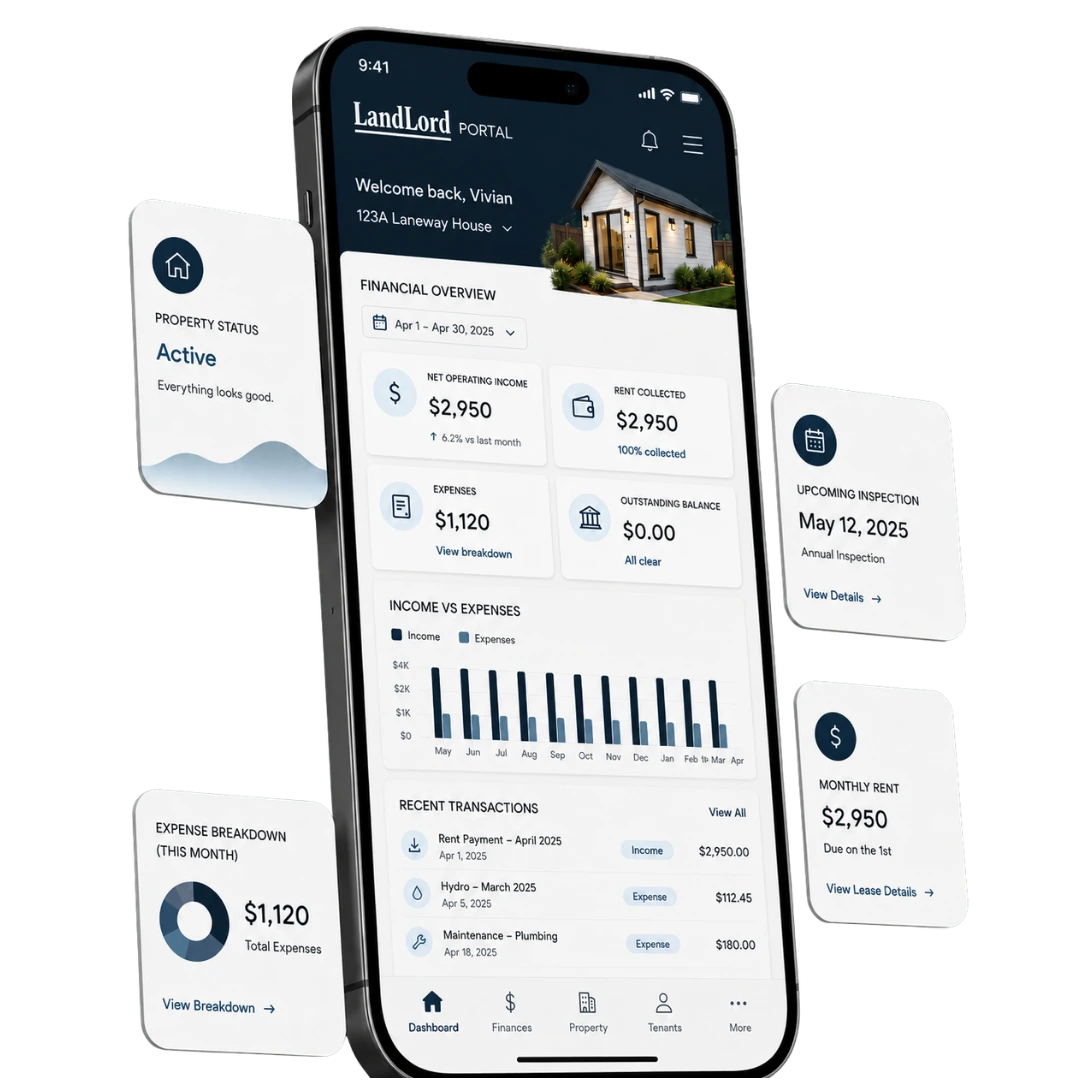
Review statements, invoices, inspection photos, maintenance activity, tenancy records and property documents through LandLord’s secure client portal.
Relevant Owner Feedback
Selected feedback relevant to leasing, owner visibility and the management of connected residential properties.
“The online portal is great, the move in inspection very thorough, and the communication is always prompt and professional.”
Blair NewboldProperty owner · Google review
“They’ve dealt with everything from new tenants, broken appliances, roof repairs and more... I wouldn’t trust my home to anyone else.”
Kim SmitherRental-home owner · Google review
“He has kept us informed at every step along the way and has been very responsive to our needs.”
Heather WingerProperty owner · Google review
Other Property Types
Service Areas
LandLord manages secondary, basement, laneway and garden-suite rentals across Toronto and surrounding GTA communities. Use our Service Areas directory for city-specific coverage and local property management information.
Explore All Service AreasSecondary Suite Property Management FAQs
Clear answers about suite types, owner-occupied properties, utilities, documentation, tenant placement, occupied units and management scope.
LandLord manages basement apartments, internal secondary suites, laneway suites, garden suites and other self-contained additional residential units across Toronto and the GTA. The property can be owner occupied, fully rented or part of a larger rental portfolio.
Yes. Professional management can be especially useful when the owner lives on the same property. LandLord handles leasing, rent, tenant communication, maintenance coordination and notices so the owner does not need to manage the relationship directly.
Yes. When both units are rented, each tenancy can be tracked separately while shared systems, exterior areas and property-wide maintenance are coordinated through one management structure.
Pricing depends on whether LandLord manages only the additional unit or the full property, along with occupancy, service scope and shared-system complexity. Use the property-management fee calculator for an initial estimate.
Yes. Tenant placement can include rental pricing, listing preparation, marketing, showings, application review, tenant screening and lease coordination. The listing strategy is adapted to the suite’s layout, access, privacy, parking and utility arrangement. Explore leasing and tenant-placement services.
The arrangement depends on metering, lease wording and the physical setup. During onboarding or leasing, the team documents which utilities are separately metered, included in rent, paid by the owner or allocated under the current tenancy structure.
LandLord can coordinate the repair across both households, arrange access and determine whether the work relates to the suite, the main dwelling or a shared system such as plumbing, heating, electrical service or drainage.
In many cases, yes. The tenancy can continue while leases, payment records, keys, utilities, access procedures, maintenance history and owner instructions are transferred into the management system.
Yes. Managed properties have access to 24/7 emergency support. Situations involving resident safety or the risk of substantial property damage are triaged promptly, including issues affecting shared plumbing, heating, electrical or access.
When a tenancy becomes eligible, LandLord confirms the applicable rules, prepares the required notice and sends it within the required timeline based on the owner’s instructions. The property’s construction and occupancy history may affect which rent rules apply, so the tenancy is reviewed individually.
Yes. LandLord can provide local tenant support, rent collection, maintenance coordination, inspections, owner reporting and oversight of the additional unit and main property. Review non-resident property-management support.
Start with the property address, suite type, occupancy, lease status, main-home use, utility setup, access, parking, outdoor-space arrangement and immediate goal. Available property records can then be organized during onboarding.
Ready to Discuss Your Additional Unit?
Share the property location, suite type, current occupancy and your immediate goal. We’ll connect you with the right team and outline the most practical next step.