
Estimated reading time: 7 minutes
Renting a property in Toronto involves more than finding a unit you like and submitting an application.
Renters need to compare properties, understand what is included in the rent, prepare application documents, recognize potential scams, review the lease carefully, and understand the basic responsibilities that apply once the tenancy begins.
This guide walks through the main stages of renting a home in Toronto so you can approach the process with greater confidence.
Searching for Rental Properties in Toronto
Toronto includes a wide range of rental housing, from condominium apartments and purpose-built rental buildings to houses, townhouses, basement apartments, and multiplex units.
The right rental depends on more than the monthly price.
Before beginning your search, consider:
- Your maximum monthly housing budget.
- Which utilities need to be included.
- Transit and commuting needs.
- Parking requirements.
- Number of bedrooms.
- Laundry and appliance requirements.
- Pet considerations.
- Building amenities.
- Preferred neighbourhoods.
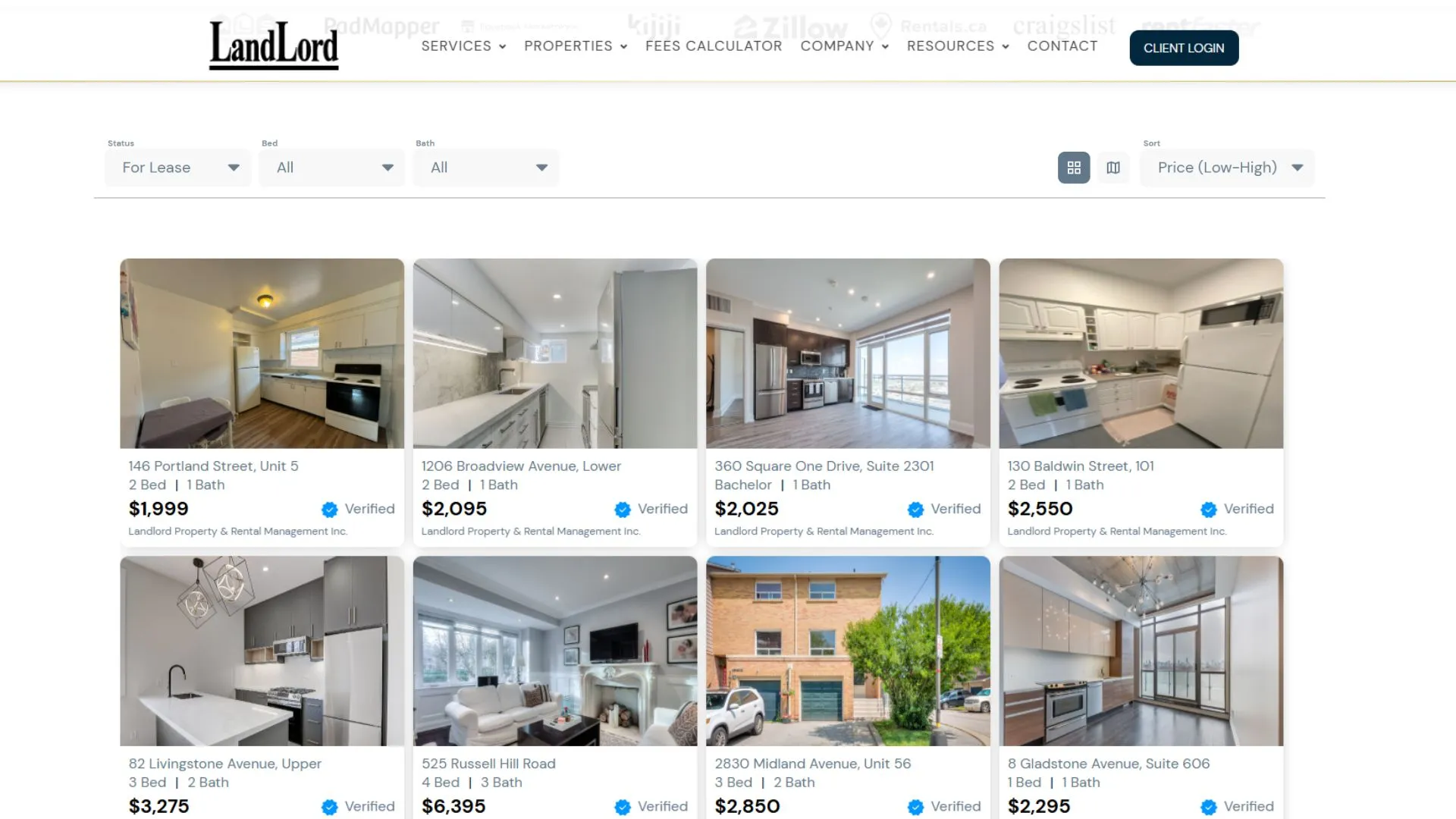
Renters can search through established listing platforms such as Realtor.ca as well as LandLord's Toronto rental listings .
How to Avoid Rental Scams
Fraudulent rental listings can appear on classifieds, social media, and other online platforms.
Warning signs can include unusually low rent, pressure to send money immediately, refusal to arrange a viewing, inconsistent information about the property, or someone claiming they cannot provide normal documentation.
Before sending money:
- Confirm that the property and address exist.
- Verify who is offering the property for rent.
- View the unit in person where practical or arrange a credible verified virtual viewing if distance makes that impossible.
- Review the proposed lease before making a commitment.
- Use traceable payment methods.
- Be cautious when someone creates artificial urgency around a deposit.
Keep copies of the listing, correspondence, payment records, and lease documentation.
Renters deciding between common building types can also review our guide to condo vs. apartment rentals in Toronto .
Preparing a Rental Application
When you find a property you want to rent, the landlord or leasing representative will usually request information to evaluate the application.
The exact requirements vary, but renters may be asked for:
- Government-issued identification.
- Proof of income or employment.
- Credit information.
- Previous rental history.
- Landlord references.
- Employer contact information.
- Additional supporting financial documentation where appropriate.
Having these documents ready can make the application process more efficient.
What If You Do Not Have Canadian Credit History?
Newcomers, students, and other applicants may not yet have an established Canadian credit file.
That does not automatically make it impossible to rent.
Depending on the landlord and circumstances, applicants may be able to provide other evidence demonstrating their ability to meet the tenancy obligations, such as:
- Employment documentation.
- Banking or financial information.
- Previous landlord references.
- International credit information where available.
- A guarantor where appropriate and voluntarily accepted.
Landlords must still comply with Ontario's Human Rights Code when evaluating rental applicants.
Review the Lease Before Signing
For most residential tenancies covered by Ontario's Residential Tenancies Act, landlords are required to use the Ontario Standard Lease.
Before signing, confirm:
- The legal rent.
- The commencement date.
- What utilities are included.
- Whether parking is included.
- Whether a locker or storage area is included.
- Who is responsible for setting up utility accounts.
- Any lawful additional terms attached to the lease.
- Applicable condominium rules if the property is a condo.
Do not assume that electricity, water, gas, internet, parking, or other costs are included simply because they were not prominently mentioned in the advertisement.
Rental Deposits in Ontario
Ontario does not permit landlords to collect a general damage or security deposit for an ordinary tenancy covered by the Residential Tenancies Act.
A landlord may generally collect a rent deposit of up to one month's rent, which is applied to the last rental period rather than held as protection against damage.
A refundable key deposit may also be permitted within the applicable rules, but it should reflect the expected replacement cost of the keys or access devices.
Landlord Maintenance Responsibilities
Landlords are responsible for maintaining rental properties in a good state of repair and complying with applicable health, safety, housing, and maintenance standards.
That can include maintaining:
- Plumbing.
- Heating systems.
- Electrical systems.
- Landlord-supplied appliances.
- Building systems and fixtures.
- Common areas where applicable.
A landlord's repair obligation does not disappear simply because the tenant knew about a problem before moving in.
Tenant Maintenance Responsibilities
Under Ontario's Residential Tenancies Act, tenants are responsible for the ordinary cleanliness of the rental unit.
Tenants may also be responsible for undue damage caused by their own wilful or negligent conduct, or by occupants or guests for whom they are responsible.
This is different from ordinary wear and tear or a building component simply reaching the end of its useful life.
Tenants should also report maintenance concerns promptly, particularly leaks, electrical issues, loss of heat, water problems, or other conditions that could become more serious if ignored.
Requesting Repairs
Report maintenance issues through the method provided by the landlord or Property Management company and keep a record of the request.
Include enough information for the problem to be understood and, where useful, photographs or video.
Emergency conditions require a different level of response from minor non-urgent repairs, so provide clear information about what is happening.
Can a Tenant Renovate or Alter a Rental Unit?
Tenants should obtain the landlord's written permission before making alterations to the property.
This can include painting, mounting certain fixtures, installing shelving, replacing hardware, or making more substantial modifications.
The lease or condominium rules may also restrict particular alterations.
Unauthorized changes can create disputes over restoration or repair costs when the tenancy ends.
Understanding Rent Increases
Ontario regulates when and how rent can be increased during an existing tenancy.
Rent can generally only be increased once at least 12 months have passed since the tenancy began or the previous lawful increase, and proper written notice is required.
Many units are also subject to Ontario's annual rent increase guideline.
Units first occupied for residential purposes after November 15, 2018 are generally exempt from the annual guideline, although the timing and notice requirements for an increase can still apply.
Our Ontario Rent Increase Calculator provides the applicable guideline information and calculation.
A longer fixed-term lease does not automatically freeze the rent for the entire term if a lawful rent increase can otherwise take effect under Ontario law.
What to Do If a Problem Develops With Your Landlord
Start by documenting the issue and communicating clearly with the landlord or Property Management company.
Keep copies of:
- Emails and messages.
- Maintenance requests.
- Photographs.
- Notices.
- Relevant sections of the lease.
- Payment records.
If the issue cannot be resolved directly, the Landlord and Tenant Board provides information about rights, applications, mediation, dispute resolution, and hearings.
Tribunal staff can provide information about LTB processes, but they do not provide legal advice. Tenants who need legal advice can explore the legal-help resources identified by Tribunals Ontario or contact an appropriate legal clinic or legal professional.
Renting With Confidence in Toronto
A successful rental search starts with preparation.
Know what you can afford, compare the complete monthly cost rather than rent alone, verify listings before sending money, prepare your application documents, and read the lease before signing.
Once the tenancy begins, keep important records and communicate promptly about maintenance or other concerns.
Understanding the basic rules from the beginning can prevent many of the most common misunderstandings between landlords and tenants.
Frequently Asked Questions
What are some overlooked tips for finding a rental in Toronto?
Compare several neighbourhoods rather than limiting the search to the most popular areas. Also compare the complete monthly cost, including utilities, parking, transportation, laundry, and other expenses rather than looking only at the advertised rent.
How can I verify that a Toronto rental listing is legitimate?
Confirm the property exists, verify who is offering it for rent, arrange a credible viewing, review the lease documentation, and use traceable payments. Be particularly cautious if someone pressures you to send a deposit before normal verification can take place.
Can I rent in Toronto without a Canadian credit score?
It may be possible. Applicants without an established Canadian credit file can provide other supporting information such as employment documents, banking information, rental references, international credit history where available, or a guarantor if appropriate.
What should I check before signing a lease?
Confirm the rent, start date, included utilities, parking, storage, payment method, and any additional terms. Condo renters should also review applicable condominium rules.
Can I negotiate the rent?
A prospective tenant can ask whether the landlord is willing to negotiate the starting rent or other terms before the lease is signed. Whether the landlord agrees will depend on the property and market conditions.
Does signing a longer lease protect me from rent increases?
Not necessarily. A fixed-term lease does not automatically prevent a lawful rent increase during the term once Ontario's applicable timing and notice requirements have been satisfied.
Who is responsible for repairs?
The landlord is responsible for maintaining the rental property in a good state of repair and meeting applicable maintenance standards. Tenants are responsible for ordinary cleanliness and can be responsible for undue damage caused wilfully or negligently.
Where can I get help if I have a tenancy dispute?
The Landlord and Tenant Board provides information about Ontario tenancy rights, applications, mediation, dispute resolution, and hearings. It does not provide legal advice, so tenants who require legal advice should consult an appropriate legal resource or professional.