
Estimated reading time: 5 minutes
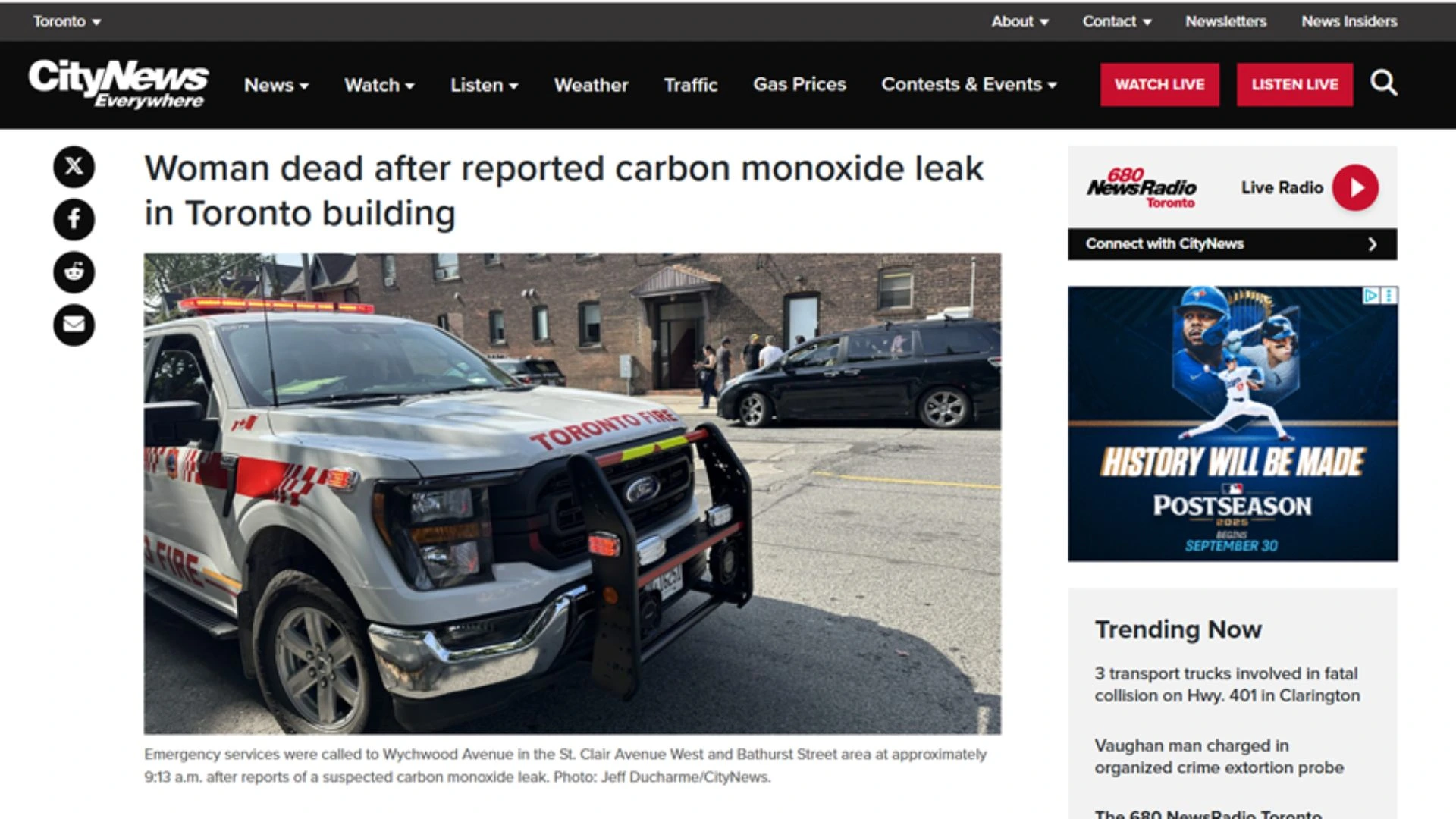
In September 2025, emergency crews responded to a midtown Toronto apartment building following reports of a suspected carbon monoxide leak.
A woman was found dead and the building was evacuated while officials investigated. At the time of the initial reporting, police had not confirmed whether her death was connected to carbon monoxide or to a pre-existing medical condition.
The incident received local news coverage and served as a reminder of why carbon monoxide detection and the maintenance of fuel-burning equipment matter in residential properties.
Carbon monoxide incidents are not always caused by furnaces, but heating equipment, water heaters, fireplaces, and other fuel-burning appliances can all become potential sources if combustion gases are not vented safely.
How a fuel-burning furnace works
Many Toronto rental homes use fuel-burning heating equipment.
During normal operation, the system burns fuel to produce heat and directs combustion gases safely outside through the appropriate venting system.
Problems with the appliance, heat exchanger, flue, venting, or combustion process can potentially allow carbon monoxide or other combustion gases to enter occupied areas.
That is why furnace maintenance is not simply about avoiding a cold house.
It is also part of maintaining the safe operation of a fuel-burning system.
Why carbon monoxide is dangerous
Carbon monoxide is colourless and odourless, which means people cannot reliably detect it without an alarm.
Exposure can produce symptoms such as headache, dizziness, nausea, weakness, confusion, and fatigue.
Higher concentrations or prolonged exposure can become life-threatening.
Because some early symptoms can resemble other illnesses, a functioning carbon monoxide alarm is an essential safety device rather than something residents should try to replace with their own senses.
Ontario landlords have specific CO alarm responsibilities
Ontario's Fire Code establishes carbon monoxide alarm requirements for residential buildings in specified circumstances involving fuel-burning appliances, fireplaces, garages, and certain shared heating systems.
The requirements were expanded beginning January 1, 2026.
The Government of Ontario's carbon monoxide safety guidance explains where alarms are required and the responsibilities of property owners and landlords.
In rental units where the rules apply, landlords are responsible for installing and maintaining carbon monoxide alarms.
Landlords must also test applicable CO alarms annually and after every change in tenancy, as well as after certain battery or electrical changes.
Alarms also need to be replaced according to the manufacturer's instructions.
CO alarms and furnace maintenance do different jobs
A functioning carbon monoxide alarm is a critical last line of defence.
It does not replace proper maintenance of the equipment that could produce carbon monoxide.
Likewise, a recently serviced furnace does not eliminate the need for correctly installed and functioning CO alarms.
Good rental-property safety therefore involves both:
- Maintaining fuel-burning equipment and venting appropriately.
- Keeping required carbon monoxide alarms installed and operational.
When should a furnace be inspected?
Furnace servicing should follow the manufacturer's recommendations and guidance from a qualified heating professional.
Many property owners choose to schedule preventative furnace service before the heating season begins.
Fall can be a practical time because problems can be identified before the system is operating heavily during Toronto's colder months.
Depending on the equipment, a qualified technician may review areas such as:
- Combustion and safe operation.
- Heat exchanger condition.
- Venting and flue connections.
- Airflow and filters.
- Electrical and gas components.
- Signs of corrosion, damage, or abnormal operation.
The exact inspection and maintenance procedure depends on the furnace and should be determined by the appropriate qualified professional.
Preventative maintenance matters for rental properties
Heating equipment rarely fails at a convenient time.
A breakdown during cold weather can create an urgent habitability problem and make repairs more difficult to coordinate when HVAC companies are already busy.
Planned rental-property maintenance provides an opportunity to identify deterioration before the equipment stops operating completely.
Preventative care can also make budgeting easier because owners have more opportunity to plan for repairs or replacement rather than responding only after a failure.
Know the warning signs
Owners and tenants should not attempt to diagnose a potential carbon monoxide problem themselves.
Warning signs involving heating equipment can include unusual furnace behaviour, abnormal smells associated with combustion equipment, visible corrosion or venting damage, repeated shutdowns, or a carbon monoxide alarm activating.
If a CO alarm sounds or carbon monoxide exposure is suspected, occupants should follow emergency guidance and contact the appropriate emergency services rather than remaining in the property to investigate.
Property Management should include safety systems
Safety-related maintenance is one of the areas where a documented Property Management process matters.
Important tasks need to be scheduled, recorded, and followed up rather than relying on someone remembering when an inspection or alarm test was last completed.
For properties managed by LandLord, preventative maintenance procedures can include seasonal property reviews and coordination with qualified third-party contractors where heating equipment requires professional inspection or service.
Required smoke and carbon monoxide alarm testing should likewise form part of the property's documented safety process.
The bottom line
A furnace is more than a comfort system.
Where fuel-burning equipment is involved, safe operation, proper venting, and functioning carbon monoxide alarms are all important parts of protecting the people living in the property.
Preventative maintenance cannot eliminate every equipment failure, and a CO alarm cannot prevent carbon monoxide from being produced.
Together, however, proper equipment care and compliant alarm systems create important layers of protection.
Frequently Asked Questions
Does Ontario require landlords to provide carbon monoxide alarms?
Ontario's Fire Code requires carbon monoxide alarms in residential buildings in specified circumstances involving fuel-burning appliances, fireplaces, garages, and certain heating arrangements. In rental units where the requirements apply, the landlord is responsible for installation and maintenance.
How often do landlords need to test carbon monoxide alarms?
Ontario requires landlords to test applicable carbon monoxide alarms in rental units annually and after every change in tenancy. Additional testing is required after certain battery replacements or changes to an electrical circuit.
How often should a furnace be inspected?
Follow the furnace manufacturer's maintenance instructions and the recommendations of a qualified heating professional. Many owners schedule preventative servicing before the heating season so problems can be identified before cold weather places greater demand on the system.
Does a furnace inspection replace a carbon monoxide alarm?
No. Equipment maintenance and carbon monoxide detection serve different purposes. Fuel-burning appliances should be properly maintained, while required CO alarms must remain correctly installed, operational, and tested according to Ontario's requirements.
Need help with your property?
Tell us what you are considering and our team will help determine the right next step.
Thank you.
Your enquiry has been sent. A member of our team will be in touch shortly.