Estimated reading time: 6 minutes
Resistance to Missing Middle housing in Toronto is not always about zoning, parking, or infrastructure. Housing is deeply personal, and changes to a familiar neighbourhood can also trigger concerns about identity, stability, control, and what residents fear they may lose.
Understanding those reactions matters because Toronto's housing conversation increasingly involves adding duplexes, triplexes, fourplexes, sixplexes, and other low-rise housing forms within established neighbourhoods. Successful change therefore depends not only on what can legally be built, but also on how that change is designed, explained, and understood.
Why Change Feels Threatening
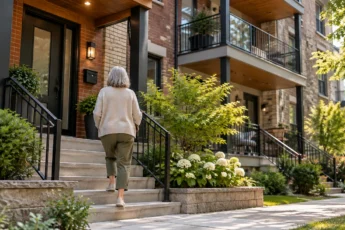
Home is more than an asset. People form emotional connections to their streets, neighbours, routines, views, trees, architecture, and the physical character of the places where they live. A proposal to change that environment can therefore feel more consequential than the number of new housing units might suggest.
One psychological concept that helps explain this reaction is loss aversion: people often experience the possibility of losing something they already value more strongly than the possibility of receiving an equivalent benefit. In a housing debate, residents may focus first on what could change — privacy, parking, neighbourhood appearance, traffic, trees, or familiarity — rather than on the potential value of additional housing.
Status quo bias can reinforce the same response. Existing conditions may feel inherently safer simply because they are familiar, even when demographic, economic, and housing conditions around the neighbourhood have already changed.
These concepts do not mean community concerns should be dismissed. They help explain why even relatively modest Missing Middle housing proposals can provoke reactions that extend beyond the physical scale of the development itself.
Why Resistance to Missing Middle Housing Exists
Some concerns surrounding multiplexes are practical. Residents may reasonably ask how additional housing will affect parking, trees, servicing, privacy, construction activity, traffic, or local infrastructure.
Other concerns are based more heavily on assumptions about what additional housing will do to a neighbourhood.
Property values are a common example. Homeowners may assume that nearby rental or multi-unit housing will reduce resale values, even though research into multiplexes and neighbouring property values does not support a simple conclusion that low-rise density inherently lowers surrounding home values.
The scale of development also matters. One fourplex or sixplex added to an established residential street represents a very different form of neighbourhood change from a large apartment tower. Treating every form of density as though it produces the same impact can make public discussion less useful.
Housing Resistance Can Also Be About Neighbourhood Identity
There can also be a social dimension to resistance. In neighbourhoods dominated by detached homeownership for decades, adding rental or multi-unit housing can challenge assumptions about what type of household belongs in the area.
These assumptions are not always expressed directly. Instead, they may appear through concerns that renters will be more transient, that a neighbourhood will lose its identity, or that additional housing will fundamentally change the type of community residents chose to live in.
Yet neighbourhood identity is rarely static. Households age, children leave home, families change, properties are renovated, businesses open and close, transit expands, and the housing needs of the population evolve. The question is therefore not whether neighbourhoods change, but how that change is managed.
How Developers Can Reduce Resistance to Change
Zoning permission alone does not create community acceptance. Developers, planners, and policymakers also need to consider how change is framed and communicated .
Community engagement tends to be more productive when concerns are acknowledged rather than immediately dismissed as opposition to housing. Residents are more likely to evaluate a proposal constructively when they understand its actual scale, design, and impact.
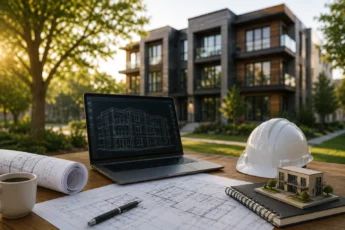
Visual information can help. Terms such as “six units” or “increased density” may cause people to imagine a building much larger than the low-rise structure being proposed. Renderings, elevations, site plans, and completed examples make the conversation more concrete by showing height, setbacks, entrances, landscaping, and the building's relationship to neighbouring homes.
How Housing Is Framed Matters
Discussions that focus exclusively on “adding density” can make housing policy feel abstract and imposed. The same conversation can feel very different when connected to recognizable housing needs.
Additional low-rise housing can allow an older resident to downsize without leaving the neighbourhood, provide an independent unit for an adult child, create rental housing for someone who already works nearby, or allow several households to live on land that previously accommodated only one.
None of those examples eliminates questions about infrastructure or design. They simply make the purpose of the housing easier to understand.
Good Multiplex Design Can Reduce Conflict
Design is one of the most practical tools for addressing neighbourhood concerns. Building height, setbacks, rooflines, windows, entrances, waste storage, landscaping, trees, exterior materials, and the placement of mechanical equipment all influence how a multiplex relates to neighbouring properties.
A multi-unit building does not necessarily have to look like a conventional apartment building. Toronto already contains duplexes, triplexes, converted houses, and small apartment buildings that fit naturally into established residential streets.
Thoughtful multiplex infill design can preserve a low-rise residential scale while allowing several households to live on the same property.
What Homeowners Should Actually Consider
Supporting more housing does not require pretending that development has no impact. Construction can create disruption, and new buildings can affect trees, privacy, views, parking patterns, servicing, or the appearance of a street.
But maintaining the status quo has consequences as well. Limited housing choice can make it harder for younger adults to remain in the communities where they grew up, while older homeowners who want to leave a detached house may find relatively few smaller housing options nearby.
Families also change in size, income, and housing needs over time. A neighbourhood made up almost entirely of one housing form provides fewer options for people who want or need to move without leaving the area.
Missing Middle housing offers one way to expand that range without relying exclusively on high-rise development.
How Housing Resistance Affects Future Tenants
The language used during housing debates can affect the people who eventually occupy the new homes. When rental housing is repeatedly described as a threat to neighbourhood character, tenants may receive an implicit message that they are less legitimate members of the community than homeowners.
Ownership and renting are different forms of tenure, but neither determines whether someone contributes to a neighbourhood. Tenants support local businesses, use parks and transit, send children to schools, volunteer, care for relatives, and participate in the same community institutions as homeowners.
Treating housing diversity itself as neighbourhood decline can therefore create divisions that last beyond the planning debate.
Housing Diversity Can Strengthen Neighbourhood Resilience
A broader range of housing types allows people at different stages of life to remain within the same community. Smaller homes may work for singles, couples, young families, adult children, seniors, and households that neither need nor can afford a detached house.
Additional residents can also support local shops, schools, transit, services, and other neighbourhood amenities. This does not mean every proposal is appropriate or that infrastructure constraints should be ignored. It means each project should be evaluated based on its actual form and trade-offs rather than on the assumption that a different housing type is inherently harmful.
Changing the Conversation Around Missing Middle Housing
The strongest discussions about Missing Middle housing recognize that neighbourhoods can evolve without abandoning everything residents value about them.
A well-designed multiplex can preserve mature trees, maintain a familiar setback, use a house-scale roofline, and provide several homes where there was previously one. Those decisions do not remove every concern, but they shift the conversation away from an abstract fear of “density” and toward the quality of the actual building being proposed.
Conclusion: The Psychology of Change and Toronto's Housing Future
Resistance to neighbourhood change is understandable when the place being changed is someone's home. But familiarity alone does not necessarily make the existing housing pattern the best response to the needs of a growing city.
Missing Middle housing creates a way for neighbourhoods to accommodate growth gradually rather than choosing only between detached houses and large apartment buildings. Doing that successfully requires good planning, thoughtful design, infrastructure investment, and communication that treats both existing residents and future residents as part of the same community.
The goal is not simply to build more units. It is to make Toronto's neighbourhoods capable of housing more kinds of people, at more stages of life, while preserving the qualities that made those neighbourhoods desirable in the first place.
Need help with your property?
Tell us what you are considering and our team will help determine the right next step.
Thank you.
Your enquiry has been sent. A member of our team will be in touch shortly.