
Estimated reading time: 5 minutes
Living in a shared rental with roommates is a great way to save on housing costs in Toronto and across Ontario. But what if you want to move out before your roommates do?
Leaving a shared rental can be tricky — especially if you’re on the lease — but it’s absolutely possible with the right steps. Here’s exactly how to move out of a shared lease properly, protect yourself legally, and avoid unnecessary issues with your landlord or roommates.
How to Move Out of a Shared Rental in Ontario
Step 1: Check Who’s on the Lease
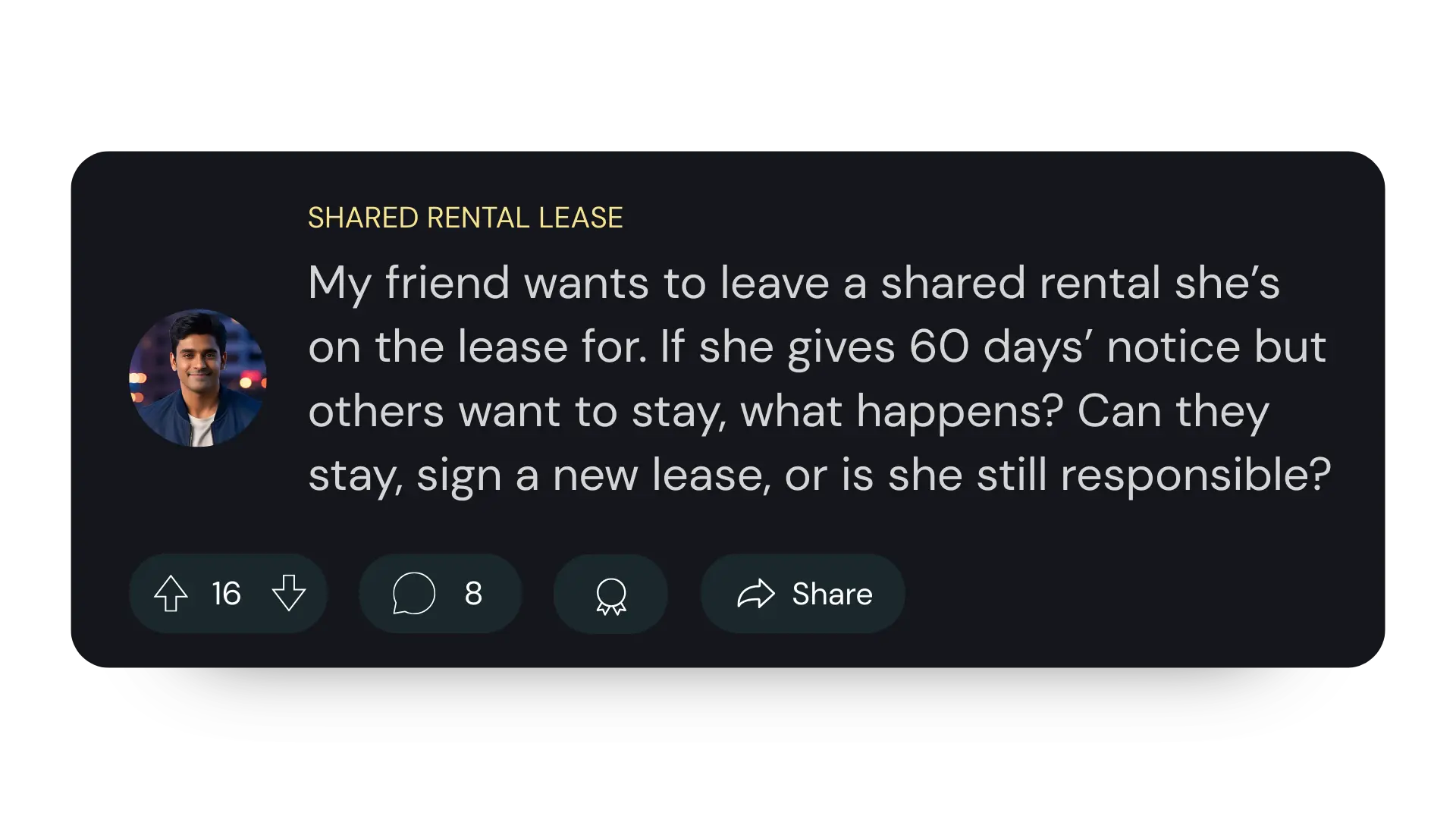
Before you do anything, you need to understand your legal position. If you’re the only tenant listed on the lease, you have full authority to end the tenancy by giving notice, even if other roommates live with you. But if you and your roommates all signed the lease together, you’re all jointly responsible — leaving early without a proper transfer can leave you financially liable.
Action: find and review your signed lease agreement, and confirm whether you’re listed alone or alongside your roommates as tenants.
Step 2: Decide if You’re Ending, Assigning, or Subletting
Depending on your situation, there are a few ways to leave legally. If you’re the sole leaseholder, you can give your landlord 60 days’ notice (aligned with the rental period) to end the lease outright. If you’re a joint tenant, you can instead assign your lease to someone else with the landlord’s approval — once assigned, you’re no longer responsible for rent or damages. A third option is subletting your room to someone who temporarily takes it over, though you’ll still stay legally responsible for the lease until it officially ends.
👉 Want more details? Check out this guide on how to end a tenancy properly in Ontario for more options depending on your situation.
Step 3: Give Proper Notice
If you’re ending your tenancy or planning an assignment/sublet, Ontario law requires you to provide written notice to your landlord using the correct forms — for example, N9 – Tenant’s Notice to End the Tenancy if you’re ending your lease. Your intended move-out date must be at least 60 days ahead and fall at the end of a rental period, like the end of a month.
Important: if you’re assigning or subletting, you’ll also need to request the landlord’s permission in writing — they must respond within a reasonable timeframe.
Step 4: Communicate with Your Roommates Early
Even if you have the legal right to leave, it’s a good idea to be upfront with your roommates about when you plan to move out, whether you’re assigning the lease or subletting, and whether they’ll need to sign a new lease as a result. This will help avoid misunderstandings and give them time to plan.
Need a new place after moving out? Explore our latest rental listings across Toronto! See what’s available here.
Step 5: Get Everything in Writing
To protect yourself, document your notice to the landlord, save any written agreements about lease transfers, new roommates, or move-out conditions, and keep copies of any landlord approvals for assignments or sublets. Written proof can prevent issues if there are disputes after you leave.
What Happens If You Leave Without Proper Steps?
Leaving a shared rental without ending the lease properly can cause serious problems: you might still be responsible for rent and damages, the landlord could take legal action against you, and your roommates might be forced to cover your share of the rent. Following the right legal process protects your finances, your rental history, and your roommates’ living situation.
Final Thoughts: Moving Out the Right Way
Leaving a shared rental in Ontario takes more than just packing up your stuff. Understanding your lease, following the legal steps to give notice, and coordinating with your landlord and roommates can make the process smooth — and keep you out of legal trouble. In short: review your lease and legal obligations, choose the right option between ending, assigning, or subletting, give proper written notice, communicate openly with your roommates, secure landlord approvals if needed, and keep everything documented along the way.
If you’re unsure whether you should assign, sublet, or end your tenancy, check this detailed guide or speak to a rental advisor.
“With the right plan, you can move forward confidently — without burning bridges or risking your financial security.”
Frequently Asked Questions
If you’re ending a month-to-month tenancy as the sole leaseholder, Ontario law requires at least 60 days’ written notice using Form N9, with the termination date falling on the last day of a rental period, such as the end of a month.
Assigning transfers your lease to someone else entirely, with landlord approval — once assigned, you’re no longer responsible for rent or damages. Subletting means someone else temporarily takes over your room or unit while you remain legally responsible for the lease until it officially ends.
Yes, if you were a joint tenant and didn’t properly end, assign, or sublet the lease before leaving. Joint tenants are all jointly responsible for the lease, so moving out informally can leave you financially liable for rent and damages even after you’ve left, and your former roommates could be forced to cover your share in the meantime.