Estimated reading time: 11 minutes
Most people assume multiplexes lower property values and damage neighbourhoods. The data tells a different story, and the real risk isn't density — it's how it's done .
Every time a multiplex proposal lands in a Toronto neighbourhood, the same concerns surface: falling property values, parking pressure, garbage, increased turnover, and the effect of more households on an established residential street.
These concerns drive petitions, planning objections, and heated discussions about neighbourhood change.
But many of the assumptions can be tested against actual evidence.
This article looks at what research shows about property values, neighbourhood conditions, and the role design and management play after a multiplex is built.
The NIMBY response is predictable — and often misses the point
When residents hear “multiplex,” they may picture the worst version: an oversized building on a lot designed for one household, several cars competing for limited parking, and constant tenant turnover.
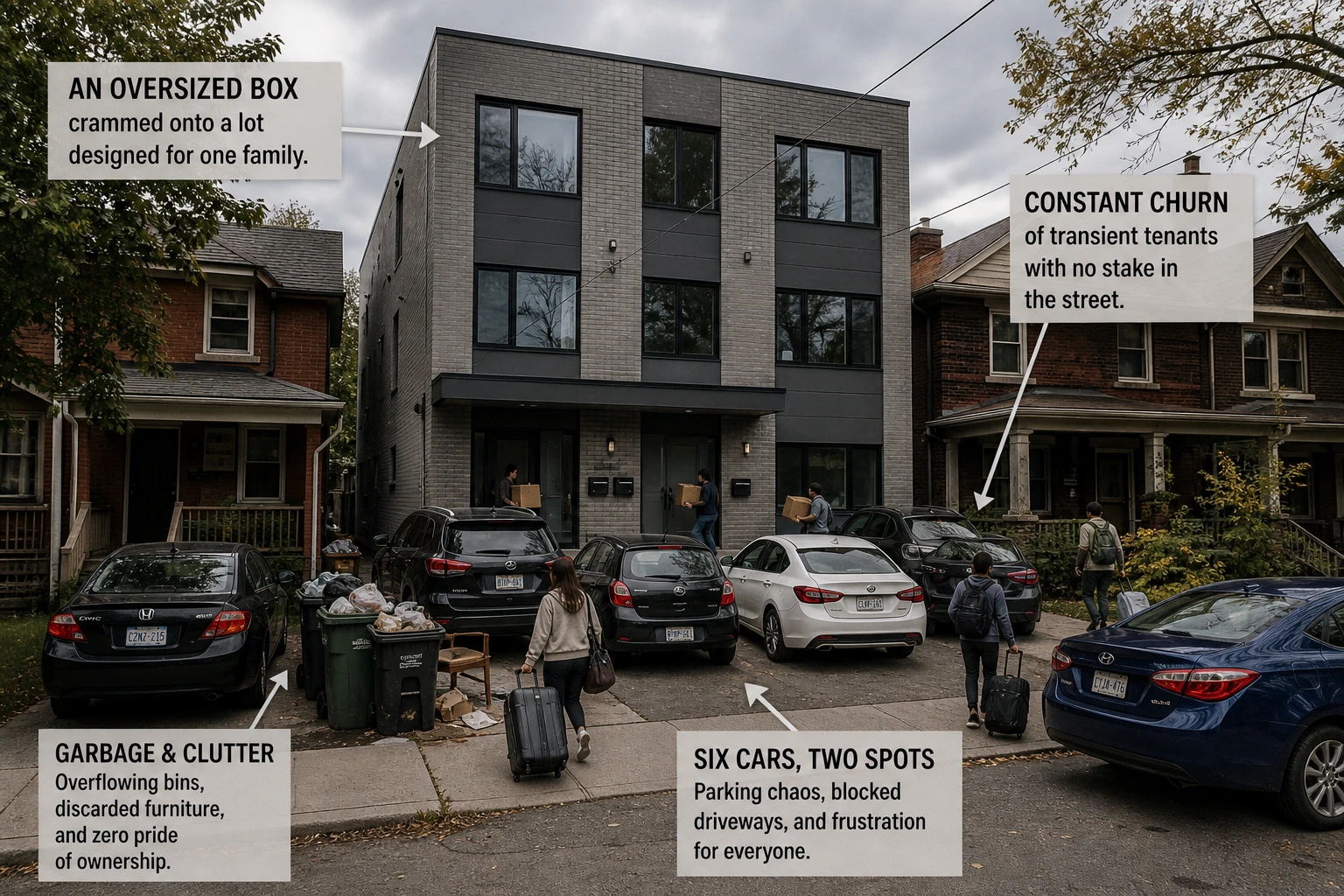
Those concerns help explain why even relatively modest multi-unit projects can attract significant neighbourhood opposition.
The 501 Palmerston Boulevard case is a recent example.
In September 2025, GreenStreet Flats proposed replacing a three-unit Edwardian home near Bathurst subway station with a 10-unit building. Residents opposed the proposal, and the Committee of Adjustment rejected it in November.
But that was not the end of the project.
The developer redesigned the proposal, addressed built-form concerns, scaled it back, and reapplied. In March 2026, the revised project was approved.
The housing need had not changed. What changed was the proposal.
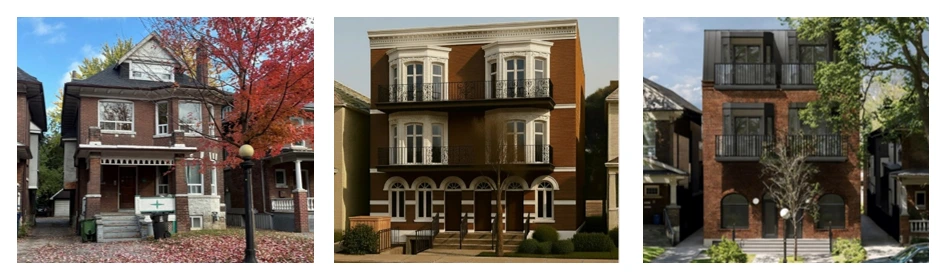
A few blocks north, 337 Palmerston is an older building that houses six households while maintaining much of the visual character associated with the street.
The lesson from Palmerston is not that every multiplex proposal is appropriate. It is that design and execution materially affect whether additional density fits into an established neighbourhood.
What the research says about property values
Falling neighbouring property values are one of the most persistent concerns associated with multiplex development.
Toronto-commissioned research by N. Barry Lyon Consultants found no evidence of material changes to neighbouring property values attributable to proximity to multiplexes.
Broader forces — interest rates, housing supply, demand, neighbourhood characteristics, and overall market conditions — remain far more important determinants of residential property values than whether a nearby property contains one household or several.
Research following Minneapolis's elimination of single-family-only zoning also provides useful context.
Research summarized by the American Planning Association found that sale prices for properties affected by the zoning change increased modestly, reflecting additional development potential rather than a collapse in neighbourhood value.
Other cities including Vancouver, Portland, and Edmonton have also expanded permissions for small-scale multi-unit housing without experiencing the widespread property-value collapse sometimes predicted during zoning debates.
The appraisal principle behind the argument
A real-estate valuation concept helps explain why condition may matter more than unit count.
It is known as the Principle of Progression and Regression.
Progression describes the tendency for a lower-value property to benefit from being surrounded by well-maintained, higher-value properties. Regression describes the opposite effect: a stronger property can be negatively affected by deteriorating surrounding properties.
Applied to multiplexes, the important variable becomes condition and execution.
A well-designed and well-maintained multiplex represents reinvestment in the property. An inadequately maintained building can negatively affect the appearance and experience of the street whether it contains one unit or six.
The variable is not simply density. It is what is built and how it is maintained.
What actually changes on the street
If declining property values are not an inevitable consequence, what does change when additional households are added to a low-rise neighbourhood?
One significant change is demographic.
Instead of one household occupying a large residential lot, several households may gain access to the same neighbourhood: younger households, downsizers, newcomers, families, or renters who could not purchase a detached property there.
CMHC describes missing-middle housing as a form of supply that can be integrated into existing neighbourhoods while providing housing options between detached houses and larger apartment buildings.
The scale of Toronto's current transition is also worth keeping in perspective.
CMHC research on missing-middle housing illustrates how unevenly this form of housing has been produced across Canadian cities.
Toronto is not experiencing an overnight replacement of its low-rise neighbourhoods. Multiplex development remains gradual and faces significant financial, construction, and regulatory constraints.
More households can also support neighbourhood amenities: local shops, schools, transit, parks, and community services all depend to some degree on the number of people living nearby.
Thoughtful additional density can therefore change the population of a neighbourhood without necessarily changing the fundamental character residents value.
Why management is one of the most important variables
The perception of a multiplex is not set only when the building permit is issued. Much of it is formed after tenants move in.
Research by Robert Sampson and colleagues published in Science found that neighbourhood crime rates were associated with levels of collective efficacy — mutual trust among neighbours combined with a shared willingness to intervene for the common good.
A later study examining community vibrancy likewise found associations between neighbourhood social activity and lower crime rates.
These studies do not prove that professional property management causes lower crime. They do illustrate why the quality of the social and operational environment around housing matters independently of density alone.
In a multiplex, good management can contribute to that environment through clear expectations, responsive maintenance, orderly shared spaces, and consistent communication.
Poor management can create the opposite experience.
The garbage-bin test
Garbage management sounds trivial, but it illustrates the operational difference clearly.
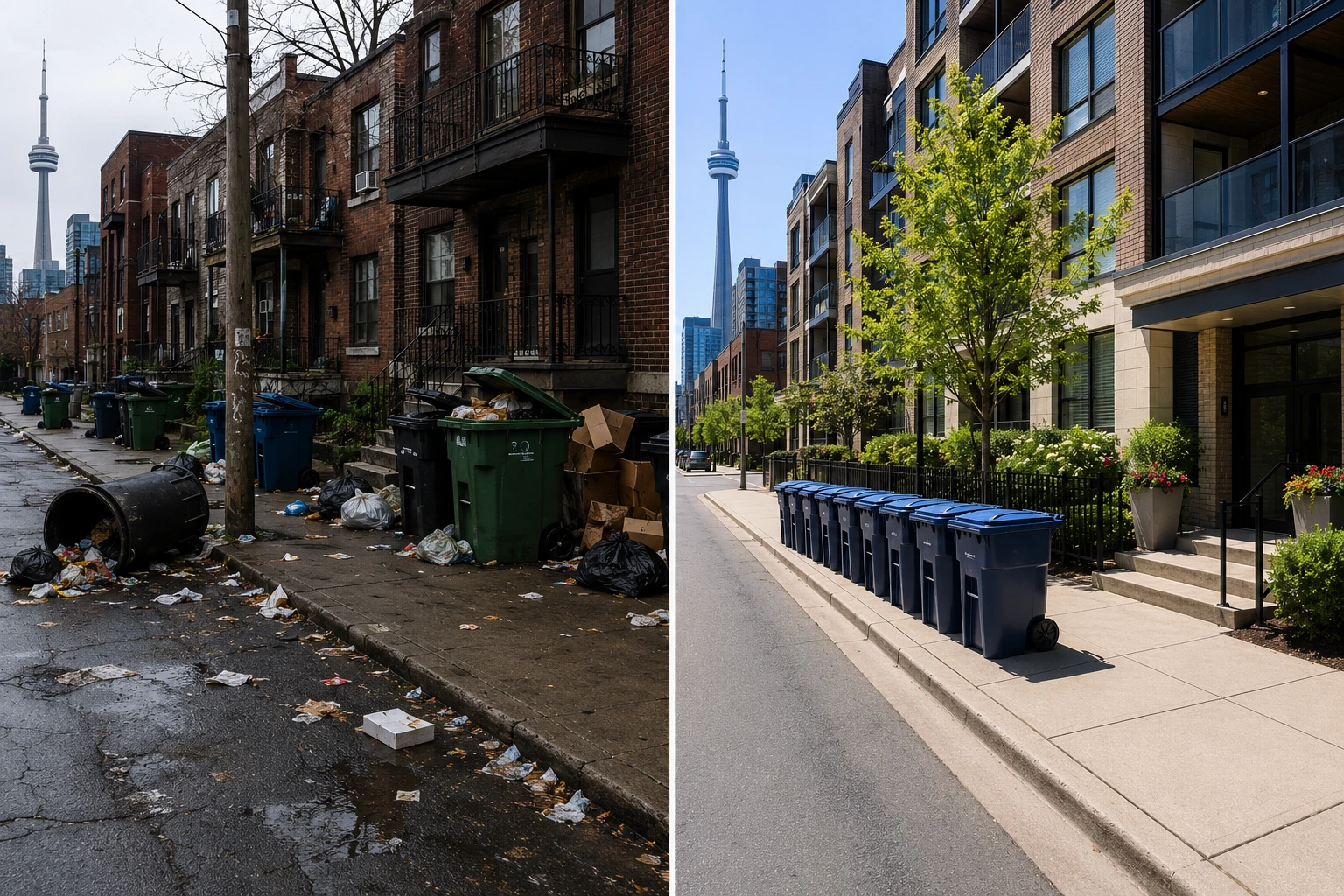
On a well-managed property, garbage and recycling have a designated location, tenants understand collection schedules, and waste management is part of routine building operations.
From the sidewalk, the property looks like another well-maintained home on the block.
Without a system, bins migrate, bulky items remain near entrances, waste accumulates, and neighbours experience the operational problem directly.
These ordinary details often shape neighbourhood perceptions more than the number of legal dwelling units inside the building.
Many of the visible complaints associated with multiplexes are therefore operational problems rather than inevitable consequences of density.
That is one reason multiplex Property Management requires more than simply collecting rent from several units. Shared spaces, maintenance, waste, tenant communication, and the relationship between households all need systems.
The more useful question
A neighbourhood that never changes is not necessarily being preserved exactly as it was.
Household sizes change. Residents age. Children leave home. Housing prices change who can access the area.
Additional low-rise housing can create opportunities for renters, younger households, newcomers, downsizers, and families who need something between a high-rise apartment and a detached house.
That does not mean every multiplex proposal is appropriate, every property should be redeveloped, or every owner is equipped to operate multi-unit housing.
But the assumption that multiplexes automatically degrade a street is too broad.
A better question is: what kind of multiplex is being built, and how will it be operated after construction is complete?
There is a meaningful difference between adding units and creating housing that works.
A successful multiplex needs to respond to the physical context of the site, meet real rental demand, and operate in a way that protects the property, its residents, and the surrounding neighbourhood.
The bottom line for Toronto landlords and investors
The available evidence does not support the idea that multiplexes inherently ruin neighbourhoods or cause surrounding property values to collapse.
Poorly designed or poorly operated properties can create legitimate problems. That distinction matters.
The risk is not simply density. It is execution.
At LandLord Property & Rental Management, multiplex projects are considered from both the development and long-term operations sides. Building additional units is only part of the equation. The other part is what happens after people move in .
Frequently Asked Questions: Multiplexes and Property Values in Toronto
Do multiplexes lower property values in Toronto?
Toronto-commissioned research found no evidence of material changes to neighbouring property values attributable to multiplex proximity. Residential values are influenced by many larger factors, including interest rates, housing supply and demand, property condition, location, and broader market conditions.
What does research from other cities show?
Research following zoning reform in Minneapolis found modest increases in the value of properties receiving additional development potential rather than a collapse in surrounding home prices. Other cities that have expanded small-scale multi-unit permissions have likewise not experienced the broad property-value decline sometimes predicted before reform.
What is the Principle of Progression and Regression?
Progression describes how a lower-value property can benefit from being surrounded by stronger, well-maintained properties. Regression describes the opposite effect. Applied to multiplexes, the principle suggests that property condition and maintenance can matter more to surrounding perceptions than the number of units alone.
Are multiplexes already common in Toronto?
Toronto historically produced relatively little missing-middle housing compared with several other Canadian cities. Although zoning permissions have expanded, development remains constrained by construction costs, financing, site feasibility, and other practical barriers.
What is missing-middle housing?
Missing-middle housing generally refers to low-rise housing types that fall between detached houses and larger apartment buildings, including duplexes, triplexes, fourplexes, and other small multi-unit properties.
Why does property management matter for multiplexes?
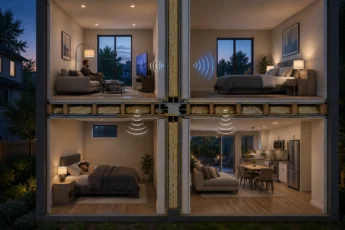
Several households sharing one property create operational needs that do not exist in the same way in a single-family home. Waste, common areas, maintenance, tenant communication, noise, and shared systems all require consistent management. Those everyday operations strongly influence how neighbouring residents experience the property.
What determines whether a multiplex works well in a neighbourhood?
Design, site context, tenant demand, maintenance, and long-term operations all matter. A multiplex that fits its physical context and is consistently maintained and managed is fundamentally different from a poorly planned or neglected multi-unit property.
Need help with your property?
Tell us what you are considering and our team will help determine the right next step.
Thank you.
Your enquiry has been sent. A member of our team will be in touch shortly.