Estimated reading time: 3 minutes
Hosting the FIFA World Cup is not just a sporting event. For a city, it's a deadline — and deadlines get things done.
Toronto is hosting six World Cup matches from June 12 to July 2, plus a 22-day FIFA Fan Festival from June 11 to July 19. Total public investment: $380 million.
But the changes happening across the city go well beyond stadium preparations, and many of them will remain long after the tournament ends.
The stadium: permanent upgrades to a city asset
Stadium investment: $146 million.
The total includes $123 million from the City of Toronto and $23 million from MLSE.
Permanent improvements include four new videoboards, upgraded locker rooms, new lighting, audio systems, broadcast infrastructure, stadium Wi-Fi, and a new rooftop patio.
The 17,000 temporary seats will be removed after the tournament. The other upgrades remain as improvements to the stadium itself.
Transit: upgrades accelerated by the tournament deadline
Line 1 speed restrictions
Speed restrictions on Line 1 were reduced from nearly 30 at the start of 2026 to six, with the TTC accelerating the removal of four more in the final week before the tournament.
The work included concrete slab repairs intended to improve long-term structural integrity.
RapidTO transit-priority lanes
New red transit-only lanes were installed on Dufferin and Bathurst streets south of Bloor Street.
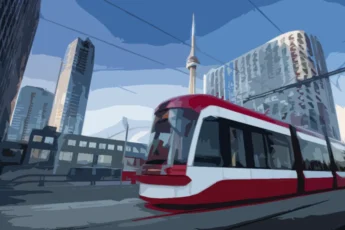
These are permanent infrastructure improvements intended to improve streetcar journey times on the 509 and 511 routes throughout the year.
New Fleet Street Transit Hub
A new dedicated transit hub at Fleet Street and Strachan Avenue was created to serve as the primary streetcar platform for Toronto Stadium and the Fan Festival on match days.
Increased service frequencies
The 509 Harbourfront, 511 Bathurst, and 504 King streetcars are scheduled to run every five minutes throughout the day from June 7 to July 24.
“Ten months ago, we had nearly 30 speed restrictions on Line 1. Today, we have six.”
— Mandeep S. Lali, TTC CEO, June 2026, Global News
Roads and city infrastructure
The World Cup created a visible deadline for deferred maintenance across the city.
Peter Street repaving, work on the DVP/Richmond ramp, and the first phase of the College and Carlton watermain and streetcar track renewal were all completed before the tournament.
Urban experts have also noted that major events can accelerate maintenance and infrastructure work that, ideally, would be part of the city's normal long-term investment cycle.
Training facilities: Centennial Park upgraded
Training facilities at Centennial Park in Etobicoke have been upgraded to FIFA standards for participating teams.
Those improvements will remain available to community sports programs and amateur athletes in the area after the tournament ends.
Neighbourhood activations
- Fort York and The Bentway: 22 days of free match broadcasts, more than 30 food vendors, live entertainment, and art installations — activating the corridor as a major public gathering space.
- Canoe Landing Park: One Love Food & Arts Market, with free entry from June 6 to August 22 along the pedestrian corridor connecting Union Station and the fan zone.
- Across the city: Riverside/Leslieville, Yonge + St. Clair, St. Clair West, Toronto Zoo, and other neighbourhoods hosting free soccer-themed events throughout the tournament period.
The real legacy won't be the matches
Most people won't remember the scorelines from Toronto's six World Cup matches five years from now.
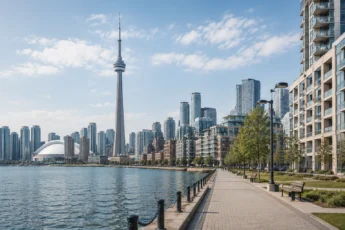
They may remember whether the transit improvements lasted. Whether the waterfront became a more active public space. Whether neighbourhood events brought people together. Whether the facilities built and upgraded for the tournament continued serving residents long after the final whistle.
Major international events are often judged by the spectacle. Cities are judged by what remains afterwards.
Toronto's World Cup legacy is already taking shape in upgraded transit infrastructure, renewed public spaces, improved sports facilities, and neighbourhood investments that residents will use every day.
The tournament may only last a few weeks, but many of the projects it accelerated will remain part of the city's fabric for years.
That is ultimately the measure that matters.
The bottom line
The World Cup itself lasts 22 days.
The infrastructure, transit improvements, public-space investments, and community facilities being delivered because of it could shape Toronto for years.
The success of FIFA 2026 won't ultimately be measured only by attendance figures or television audiences.
It will also be measured by whether Toronto residents are still benefiting from these investments long after the tournament leaves town.
That's the legacy worth paying attention to.