Estimated reading time: 3 minutes
Many property management platforms are designed around large residential buildings and institutional portfolios.
That model works well when the goal is to manage hundreds of similar units through standardized workflows and reporting. But individual property owners often need something different.
An owner with one house, condominium, townhouse, or small portfolio is usually not looking for aggregated building data. They want clear visibility into what is happening with their specific property — financially, operationally, and from a compliance perspective.
The Gap Between Building Management and Owner-Focused Property Management
Building-centric systems are typically designed around centralized operations, unit counts, and standardized reporting.
Individual property owners may instead need visibility into details such as:
- Monthly income and expenses for a specific property.
- Rental listing and leasing activity.
- Maintenance requests and completed repairs.
- Vacancy periods.
- Inspection records.
- Owner-specific tax and compliance documents.
- Non-resident tax documentation where applicable.
- Property statements and invoices.
For an individual owner, these are not minor details. They are the information needed to understand how the investment is performing.
Why Off-the-Shelf Software Wasn't the Right Fit
Like many Property Management companies, LandLord explored established third-party management platforms.
The challenge was that adapting building-focused software to individual-property management required workarounds and manual processes.
Owner-specific documents often needed to be managed separately, reporting did not always reflect how individual properties were operated, and important information could become fragmented across multiple systems.
At a certain point, adapting software that was not designed around this type of Property Management stopped making sense.
Building Around the Needs of Individual Property Owners
LandLord ultimately developed an internal system around the operational needs of individual residential property owners.
The objective was not simply to create another Property Management platform. It was to organize information around the way an owner actually thinks about their property.
That includes visibility into:
- Property-level financial activity.
- Monthly statements.
- Leasing history.
- Vacancy information.
- Maintenance documentation.
- Compliance records.
- Owner-specific documents.
For non-resident owners, the system also supports documentation associated with Canadian rental-income tax requirements .
Property-Level Financial Visibility
One of the most important differences between institutional reporting and individual-property reporting is the level at which the information is presented.
An individual owner wants to understand what happened at their property during a particular month: what rent was collected, which bills were paid, whether maintenance occurred, and what documents support those transactions.
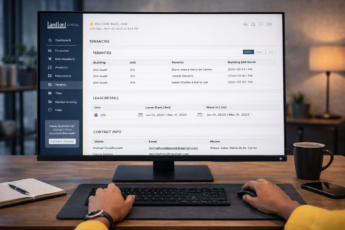
A structured landlord client portal gives owners a central location to access statements and property documentation rather than reconstructing the information across emails and separate files.
Leasing and Vacancy Information Matter Too
Property performance is not limited to monthly accounting.
When a property becomes vacant, an owner needs to understand when marketing began, how the listing is performing, what comparable properties are doing, and how quickly the next tenancy is progressing.
That connects the technology directly with the leasing and tenant placement process .
Vacancy also has a direct financial impact. Our rental vacancy cost guide looks at the expenses that can accumulate when a property sits empty.
Technology Should Support the Management Model
Property Management software should not determine how a company manages properties simply because that is how the software was originally designed.
The technology should support the management model.
For individual-property owners, that means providing information that is timely, property-specific, understandable, and connected to the decisions the owner actually needs to make.
That principle continues to guide the development of LandLord's internal systems and updated client portal .
Need help with your property?
Tell us what you are considering and our team will help determine the right next step.
Thank you.
Your enquiry has been sent. A member of our team will be in touch shortly.