
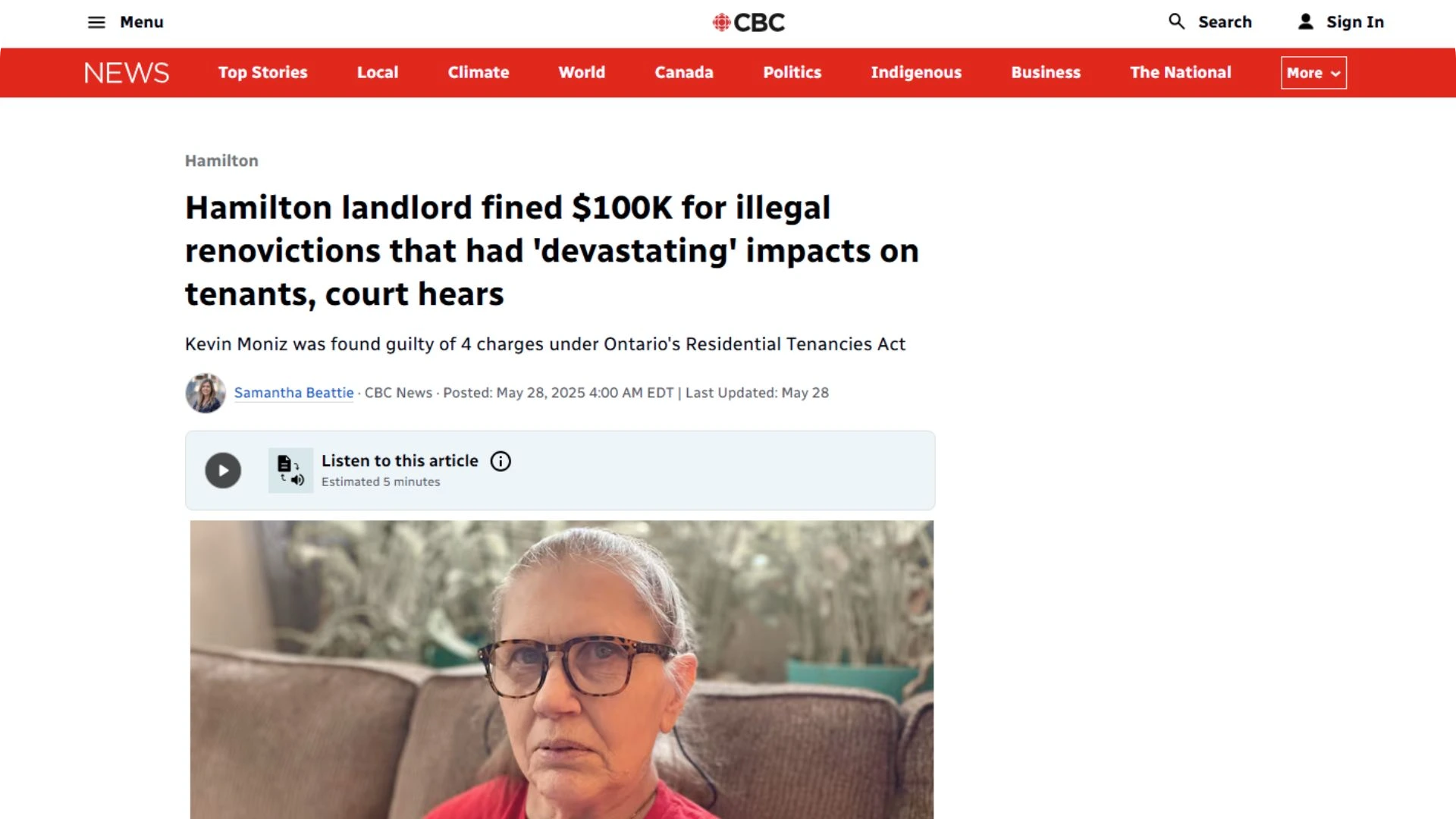
The Hamilton renoviction case has put a spotlight on something many rental owners have suspected for years: when property management companies fail to provide proper legal guidance, owners face the consequences — not the managers. This case shows how a single compliance error can escalate into fines, legal issues, and reputational damage.
In the Hamilton renoviction case, landlord Anildo Moniz was fined $100,000 — $25,000 for each of four counts — after Justice of the Peace Linda Crawford ruled that he failed to give tenants their right of first refusal after an N13-approved renovation.
But the most important part of the Hamilton renoviction case is this:
The property management company played a central role and failed to guide the owner through mandatory compliance steps.
How the Hamilton Renoviction Case Unfolded — and What Went Wrong
According to court findings and municipal investigation records, Cornerstone:
- delivered the N13 notices to tenants,
- acted as the primary communicator on behalf of the landlord,
- coordinated the renovation process, and
- failed to ensure tenants were given their mandatory right of first refusal once the renovations were completed.
The LTB confirmed that the vacancies were necessary, meaning the renoviction itself was legitimate.
The violations occurred afterward, due to improper handling of the return process — the central issue in the Hamilton renoviction case.
Cornerstone failed to:
- properly advise the owner,
- warn him about post-N13 responsibilities,
- document timelines,
- issue correct notices,
- deliver required compensation, and
- inform tenants of their right to return
This chain of errors transformed a routine renovation into the Hamilton renoviction case now circulating across Ontario news.
To understand renoviction law, view Toronto’s framework: Toronto Rental Renovation License
Why This Case Matters for Ontario Owners
Most owners hire property management companies believing:
“My manager knows the law. They’ll keep me compliant.”
But the Hamilton renoviction case shows the opposite can happen.
When managers misinterpret the Residential Tenancies Act or handle notices incorrectly, owners face:
- legal fines,
- tenant claims,
- municipal penalties, and
- expensive legal cleanup.
A property manager’s mistake becomes your liability.
When Choosing a Property Management Company, Knowledge Isn’t Optional
Any property manager can collect rent. Any property manager can schedule repairs.
But not every property manager can:
- interpret Ontario’s Residential Tenancies Act,
- identify whether a renovation truly requires vacancy,
- issue legally correct N13 notices,
- follow the strict right-of-return process,
- communicate with tenants in a compliant manner,
- document timelines and scope of work accurately,
- manage compensation properly, or
- defend the process if challenged legally.
These are not “extra services.” They are basic compliance requirements.
The Hamilton renoviction case shows exactly what happens when these basics are ignored.
Final Thought: Avoid Becoming the Next Hamilton Renoviction Case
The biggest takeaway from the Hamilton case is that choosing the wrong management company can expose owners to serious financial danger. Compliance is not a luxury — it is central to your investment’s safety.
When a property manager doesn’t know the law, you — the owner — become the one who pays for it.
This is why selecting a knowledgeable, experienced, compliance-focused management team matters more than ever. The right company protects your property, your tenants, and your legal standing. The wrong one exposes them all.
If you want a property management team that understands Ontario legislation and keeps you compliant from day one, reach out to us.
We’ll review your situation and make sure you’re never exposed to unnecessary legal risk.